
Stubborn Acne as a Metabolic Signaling Disorder. Seven Layers of Acne Biology and When Accutane Actually Makes Sense.

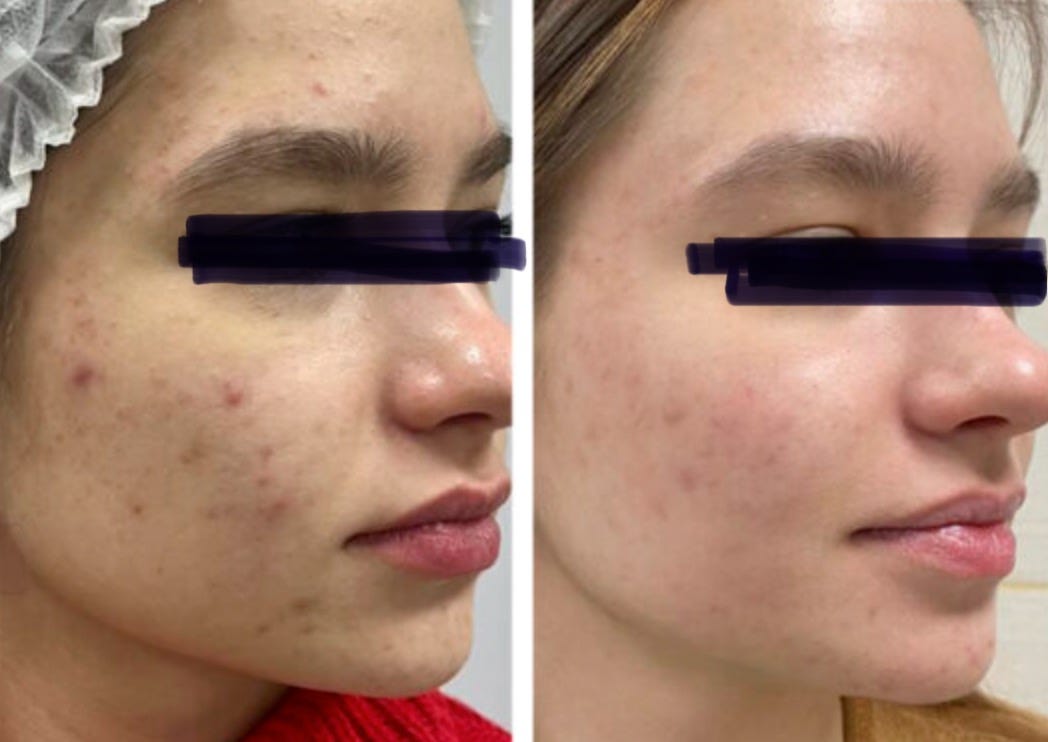
Acne is one of the few conditions where wildly contradictory advice all appears to work - until it doesn’t. Some people clear their skin with a face wash. Some by cutting dairy. Some with antibiotics. Some by fixing hormones. Some after metabolic optimization. Some only after isotretinoin.
This has produced endless arguments about the cause of acne, when the real problem is simpler and more uncomfortable: acne is not one condition.
It is a visible outcome of failures that can occur at multiple layers of biological signaling. Treatments succeed only when they act at the layer where the failure actually sits. This is why different people stop at different points and why copying what worked for someone else is so often misleading.
Most people fail not because they didn’t try hard enough, but because they fixed one layer thoroughly while the real problem lived elsewhere. When a layer truly resolves the issue, progression stops. When it doesn’t, the only rational move is to go down the ladder.
What follows is a layered diagnostic model - not ideology, not skincare advice, not dermatology dogma. A map you can actually move through.
This model did not come from abstraction. It is the result of more than a decade of lived trial, failure, partial success, relapse, testing, and correction - not only in my own body, but across others navigating the same terrain. My own acne resolved at Layer 5. For many people, it does not. One close friend of mine moved through all seven layers before stability was reached. This map exists because the pain is real, the paths are not linear, and pretending that one solution fits everyone costs people years. What follows is a framework distilled from prolonged contact with the problem.
Layer 1. Surface Obstruction and Local Microbial Imbalance
This is the “mechanical acne” layer. The problem is mostly happening inside the pore: sticky dead-skin shedding (hyperkeratinization) + trapped sebum + local bacterial growth. Sebum production itself is not abnormal, and systemic hormones are not driving the process. If this is your layer, you can often fix acne without touching diet, hormones, gut, or metabolism.
How to recognize Layer 1 acne
Layer 1 tends to look like:
Mostly whiteheads/blackheads, small inflamed pimples, “texture,” congestion.
Outbreaks not tightly synced to ovulation/luteal every month.
No deep painful nodules that take weeks to resolve.
Skin is oily or normal, not severely reactive.
You can point to triggers like: heavy sunscreen/makeup, occlusive moisturizers, sweating + staying in it, not washing after workouts, comedogenic hair products, friction.
If you’re getting deep cysts, jawline-only hormonal pattern, or lesions that feel like they originate under the skin and “hang around,” Layer 1 may still be part of it, but it’s rarely the whole story.
The Layer 1 toolkit
Layer 1 has three real workhorses. Not twenty.
1) Salicylic acid (BHA)
It’s oil-soluble. It goes into the pore and helps dissolve the “glue” that creates the plug.
How to use: Start with a leave-on 1–2% product 2–4 nights/week. If you jump to daily from day one, you’ll inflame yourself and misread that as “purging forever.”
2) Benzoyl peroxide (BP)
This is the most effective topical at reducing bacterial load and inflammatory lesions.
How to use: Thin layer, 2.5% is usually enough and often better tolerated than higher strengths.
Use in the morning or alternate nights if you’re also using a retinoid.
3) Topical retinoid (adapalene or tretinoin)
This is the “structure” tool. It changes turnover and prevents microcomedones, but it’s slower and irritation-prone.
How to use: Pea-sized amount for the whole face, not spot treating. Start 2–3 nights/week, increase only if your skin stays calm.
A Layer 1 routine that doesn’t sabotage you
Here’s the part most people mess up: they do the right actives in the wrong schedule, irritate the barrier, then acne worsens and they assume “nothing works.”
You want a routine that’s strong enough to work but gentle enough to stay consistent.
Week 1–2 (stabilization)
Gentle cleanser once daily (night).
Moisturizer that doesn’t sting.
One active only:
either BHA 2–3 nights/week
or retinoid 2 nights/week
If inflamed pimples are prominent, BP 2–3 mornings/week is fine.
Week 3–6 (build)
Increase frequency slowly:
BHA up to every other night if tolerated, or
retinoid up to 3–5 nights/week if tolerated
BP can be daily if your skin tolerates it, but many do better at every other morning.
The key is that your skin should feel “normal” most days. Slight dryness is fine. Burning, stinging, persistent tightness means you’re creating inflammation.
Timeline: how long Layer 1 should take
First 10–14 days: don’t judge outcomes. You’re changing turnover. Things can look worse from irritation or initial clearing of microcomedones.
By week 4: you should see fewer new lesions and less congestion if you’re in Layer 1.
By week 8: if Layer 1 is the true driver, acne should be clearly trending down.
By week 12: you should be close to controlled, not still “waiting for it to start working.”
So Layer 1 gets 8–12 weeks of consistent use. Not two weeks. Not “I used it three times.”
How to know Layer 1 is failing
Layer 1 “failed” when any of these are true:
You did a consistent routine for 8–12 weeks, tolerated it (not constantly irritated), and acne is unchanged.
The acne pattern is deep, cyclical, jawline/neck dominant, and lesions behave like endocrine-driven inflammation (slow, cystic, recurrent same spots).
You improve a little but then plateau fast, and each attempt to “push harder” just creates more redness and sensitivity.
You’re getting the classic story: “I fixed cleansing, I used salicylic acid, I used tretinoin, I even did BP… and it’s still there.”
That’s the pivot point. That’s when you stop trying to win Layer 1 harder and move down the stack.
Layer 2: Local Inflammatory Bias and Barrier Dysfunction
Layer 2 begins when acne no longer behaves proportionally to what’s happening on the skin surface.
At this stage, pores may be only mildly congested, oil production may be normal, and yet inflammation is exaggerated. Pimples feel sore early. Redness spreads beyond the lesion. Healing is slow. Marks linger. Treatments that should help technically make things worse. This is the layer where people say their skin is “sensitive,” but what they are actually describing is chronically elevated local immune signaling. In practical terms, this means the skin is reacting too strongly to inputs it should tolerate: sebum, bacteria, friction, actives, even water loss. Research over the last decade has shown that in acne-prone skin, inflammatory cytokines can be released before a pore is fully blocked. In other words, inflammation is not just a consequence of acne here; it is part of its cause.
This is why Layer 1 strategies partially work and then stall. Salicylic acid may improve texture but increase redness. Retinoids may initially reduce lesions but soon trigger irritation that masquerades as purging. Benzoyl peroxide may shrink pimples while leaving the surrounding skin inflamed and unstable. The mistake at Layer 2 is interpreting this as “needing stronger treatment,” when in fact the tissue is already inflamed.
Correction at this layer is not about adding more interventions. It’s about lowering baseline immune tone so the skin can stop misfiring.
The first requirement is barrier neutrality. Not “barrier repair” as an industry buzzword, but the absence of constant irritation. If your skin stings, tingles, flushes, or feels tight most days, Layer 2 is not under control. During this phase, the skin should feel boring. Normal. Quiet. That alone often reduces lesion tenderness within the first two weeks.
Zinc becomes relevant here because it directly modulates inflammatory signaling rather than mechanically altering the pore. When zinc is helpful, it does something specific: redness diminishes, lesions hurt less, and the skin’s baseline reactivity drops within roughly three weeks. If zinc changes nothing after a month, inflammation is likely not the dominant driver.
Retinoids are not excluded at Layer 2, but their role changes. Instead of being the main tool, they become conditional. If reintroduced, they must be tolerated at low frequency without increasing background irritation.
The key outcome you are looking for at Layer 2 is not “clear skin.” It is calm skin that still breaks out.
That distinction matters. When inflammation is the main amplifier, calming it leads to dramatic improvement. When inflammation was only masking a deeper signal, calming it simply reveals the underlying pattern more clearly. Acne becomes more predictable. Often more cyclical. Often more localized to the jaw, chin, or neck.
Layer 2 should be given approximately six weeks. By that point, either inflammatory tone has dropped meaningfully, or it hasn’t. If your skin is still reactive, sore, and easily inflamed, you are either not actually reducing irritation or this layer is not the primary failure. If your skin is calmer but acne continues anyway, you have successfully cleared this layer and are ready to move on.
This is where many people feel disappointed, but it’s the wrong emotion. What you’ve done is remove distortion. The remaining acne is no longer noise. It’s signal.
And signal always points downward.
Layer 3: Dietary and Insulin-Mediated Signaling
This is the layer that creates the most converts and the most confusion. Physiologically, this layer is not about “bad foods” or intolerance in the allergic sense.
Insulin and IGF-1 are growth signals. In acne-prone individuals, they increase sebaceous activity and amplify androgen signaling at the skin level, even when circulating androgens themselves are not elevated. This is why dietary changes can feel powerful. You are not fixing acne here. You are turning down the volume.
Layer 3 acne tends to have a recognizable pattern:
Breakouts worsen with certain foods, especially when eaten frequently or poorly timed
Acne improves noticeably when foods are removed, sometimes dramatically
Relapse happens when foods are reintroduced, often faster than expected
Acne may still be cyclical, but food clearly modulates severity
Importantly, many people at this layer do not have obvious insulin resistance. Fasting glucose can be normal. HbA1c can be normal. The issue is signaling sensitivity, not diabetes.
What actually works at Layer 3
Dietary changes work here because they reduce IGF-1 signaling and insulin peaks. That can happen in several ways, but the mechanism is the same.
Common successful interventions include:
Removing obvious personal trigger foods (often dairy, poorly tolerated starches, certain processed sugars)
Adjusting carbohydrate timing rather than eliminating carbohydrates entirely
Reducing chronic PUFA intake, which can amplify inflammatory prostaglandin signaling
Simplifying meals so insulin responses are more predictable
When this layer is dominant, people often see improvement within 4 weeks. Lesions decrease, inflammation drops, and acne feels more “controllable.”
This is the moment many people stop questioning anything else. “That was MILK!!” they say.
The Layer 3 trap
Dietary success at this layer is real but incomplete.
Because insulin signaling is upstream of sebaceous activity, lowering it reduces acne expression. But this does not tell you why your system needed insulin suppression to behave in the first place.
This is why Layer 3 so often turns into chronic restriction. People escalate elimination instead of asking a harder question:
Why does my skin only behave when growth signals are suppressed?
Over time, many people unknowingly:
under-eat
reduce carbohydrate intake below metabolic needs
suppress thyroid output
destabilize estrogen and progesterone production
Acne may stay better for a while. Energy, mood, sleep, cycles often worsen quietly in the background.
When acne returns, it’s often more inflammatory and more hormonally patterned than before.
Layer 3 is likely dominant if:
Food changes produce clear, repeatable improvements
Acne worsens reliably after specific dietary patterns
Improvement happens without touching skincare much
You feel you are constantly “managing” acne with diet rather than stabilizing it
Layer 3 is not your core layer if:
Dietary changes do almost nothing
Acne remains severe despite strict elimination
Restriction improves acne but worsens overall physiology
Layer 3 should not become a lifestyle.
You give this layer 4–6 weeks of intentional testing. If acne improves but does not stabilize unless restriction is maintained, that is your exit signal.
Remember: diet should eventually support metabolism, not suppress it.
If acne only behaves when growth signals are dampened, the real problem is not food. It’s that your system cannot tolerate normal anabolic signaling. That is a metabolic issue.
Layer 3 shows you whether insulin and IGF-1 are amplifiers. Once you see that clearly, the next question becomes unavoidable:
Why are counter-signals - thyroid, progesterone, estrogen, metabolic rate - too weak to balance normal growth input?
That question does not get answered with more elimination.
It gets answered at Layer 5.
Layer 4: Microbiome-Driven Inflammatory Signaling - when antibiotics help… and then don’t
Antibiotics reduce inflammatory signaling, not just bacteria. They suppress cytokine release, dampen immune activation, and lower endotoxin-driven amplification coming from the gut. Endotoxin is known to increase systemic inflammatory tone and make tissues, including skin, more responsive to androgen signaling. When that noise is lowered, acne quiets.
This explains why antibiotics can improve acne even when hormones, diet, and skincare haven’t changed.
This is also the layer where people often explain their improvement using different language. Some attribute the response to parasites, candida, or “overgrowth” and pursue cleanses or antimicrobial herbs instead of antibiotics. When these approaches help, the mechanism is usually the same: inflammatory signaling has been temporarily reduced. The improvement is real. What differs is the interpretation. The pattern - improvement often followed by relapse once the intervention stops - is identical, which is why this belongs to the same layer.
How to recognize Layer 4 involvement