
3 Best Exercises To Relieve Neck Pain Fast and Strengthen the Muscles That Keep It From Coming Back


My brother recently came to visit after a long flight, and when he arrived, his neck was in terrible pain.
And this is not someone who is weak, sedentary, or out of shape. He was an athlete and a bodybuilder in the past, and he still trains pretty intensely. It’s important to note here that general fitness does not necessarily protect you from neck pain. You can have strong shoulders, a muscular back, and excellent cardiovascular fitness while still lacking strength, endurance, and control in the smaller muscles that support the neck. Add several hours in an airplane seat, a strange pillow, or too much time looking at a screen, and the neck can become painfully stiff.
Since neck pain is so common, I wanted to write a quick summary of my favorite neck exercises that can help you heal fast and that got my brother functioning normally again in a matter of days.
The muscles and fascia of the neck work as one mechanical system. Every contraction pulls through the connective tissue woven around and through the muscles, so changing how the muscles work changes how the entire region carries load. One of the most important questions is which muscles are doing the work of supporting and controlling your head throughout the day, especially when you sit still for hours.
The neck has deeper muscles close to the vertebrae, including the longus colli and longus capitis, and larger surface muscles such as the upper trapezius, levator scapulae, sternocleidomastoid (SCM), and anterior scalenes. The deep muscles are especially important for fine control and stabilization between the vertebrae. The surface muscles create bigger movements, but they also help stabilize the neck. When the deep flexors contribute less efficiently, the SCM and anterior scalenes often pick up more of the work and stay more active than they need to.
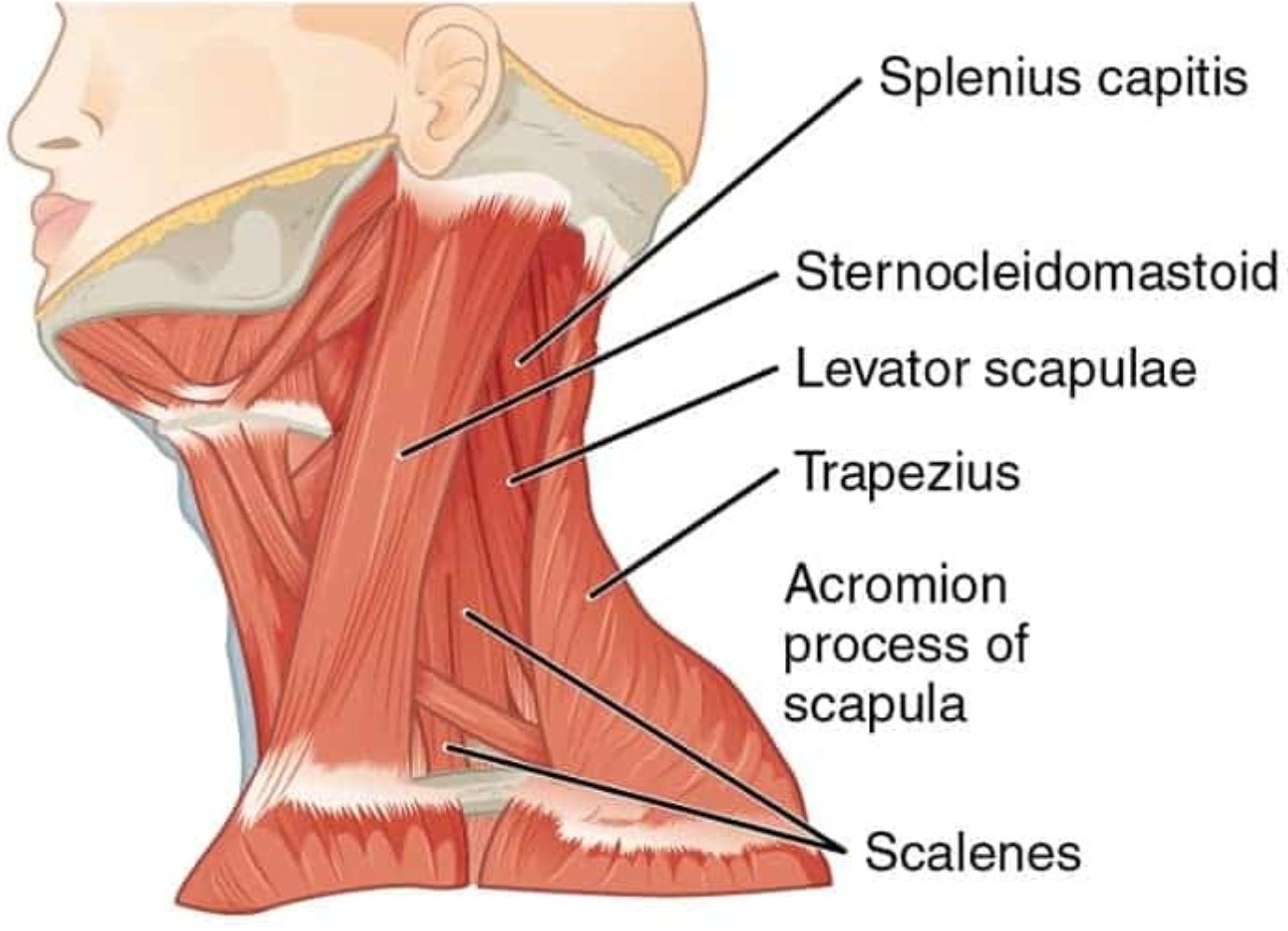
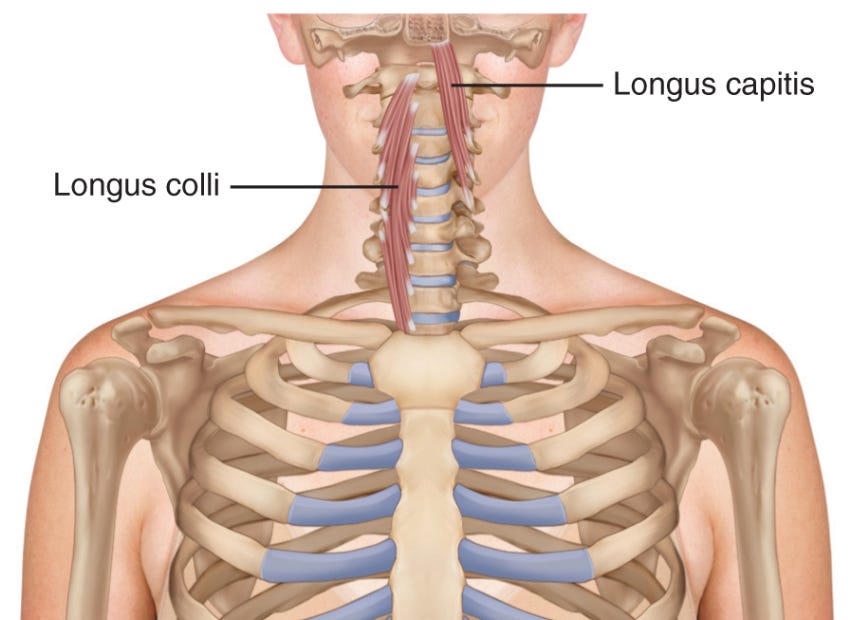
Studies of people with chronic neck pain have found reduced activation of the deep cervical flexors during the craniocervical flexion test, a standard clinical test of deep-neck-flexor function. Higher SCM activity during the test is also associated with poorer deep-flexor activation.
Improving deep flexor function can help the neck muscles share the load more efficiently. The following exercises approach the problem from several directions: they train the muscles at the front and back of the neck, stretch the levator scapulae, and restore controlled rotation. Here are my three favorites. These exercises also helped me tremendously while I was earning my master’s degree and was practically glued to my computer 24/7.
1. Supine chin tuck with head lift, or head hover
Lie on your back with your knees bent. Gently tuck your chin, then lift your head only slightly off the floor, about the thickness of a paperback book. Imagine trying to see your pelvic floor, but without sharply curling your neck or bringing your chin toward your chest. Your head should remain almost parallel to the floor, with the back of your neck long and a slight double chin. As you hold the position, keep your face and jaw relaxed. The standard guidelines I see usually recommend very short holds of three to five seconds. If that is all you can do at first, that is perfectly fine. But I would work toward holding the position longer (at least 20 seconds), or for as long as you can maintain the correct shape without letting your form collapse. A mild tremble during the hold, particularly toward the end, is normal. Lower your head, rest, and repeat two or three times.
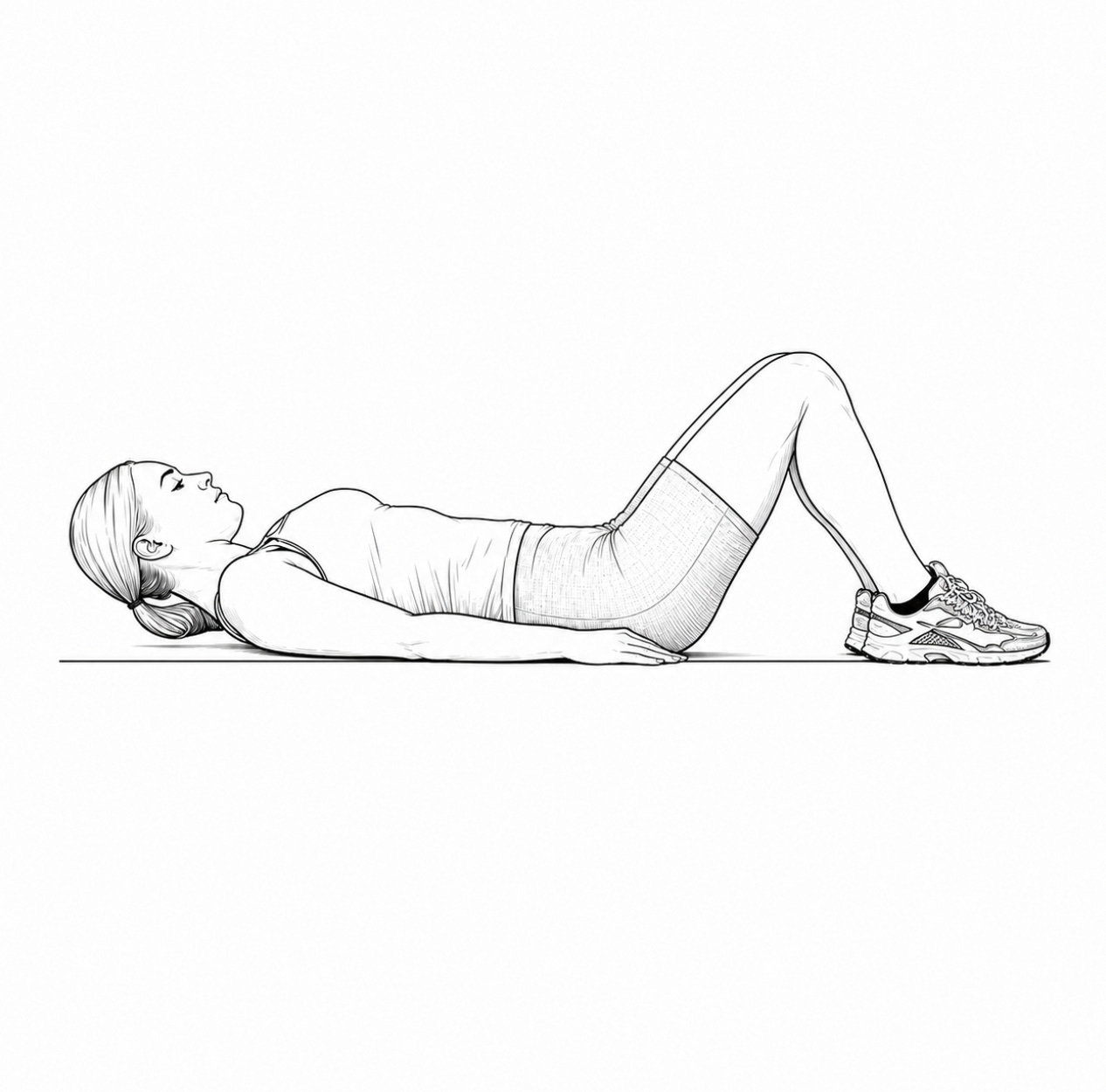
Important: Keep your abdomen soft. Do not brace your core or lift your shoulders, rib cage, or upper back. This is not a crunch. The only visible movement should be the small lift of your head, with the work concentrated in the muscles at the front of your neck.
Why it works. The chin tuck is craniocervical flexion. It activates the longus colli and longus capitis, the deep cervical flexors that run along the front of the cervical spine. In people with chronic neck pain, these muscles are often under-recruited.
When you lift your head, the longus colli and longus capitis work together with the SCM, scalenes, and other muscles at the front of the neck to support its weight. This shifts the load away from the muscles at the back of the neck, allowing them to reduce their activity and soften. Research on cervical flexion shows the same pattern: as the flexors take over, electrical activity in the posterior cervical muscles falls sharply. A head hover done right produces a redistribution of muscular effort that you can feel at the base of the skull.
In a trial of 41 people with chronic neck pain, Chung and Jeong found that eight weeks of craniocervical flexion with cervical flexion training improved pain, flexor endurance, cervical range of motion, cervical lordosis, and neck disability scores.
2. Banded isometric neck extension
To perform this, put the middle of a resistance band behind your head and hold the ends in front with enough tension to pull your head gently forward. The idea is to simply keep your head motionless; do not try to push it back or tilt it. Your neck does the work of counteracting the band’s pull. Hold for 30 seconds while breathing normally and keeping your jaw and face relaxed. Rest, then repeat for another two or three sets.
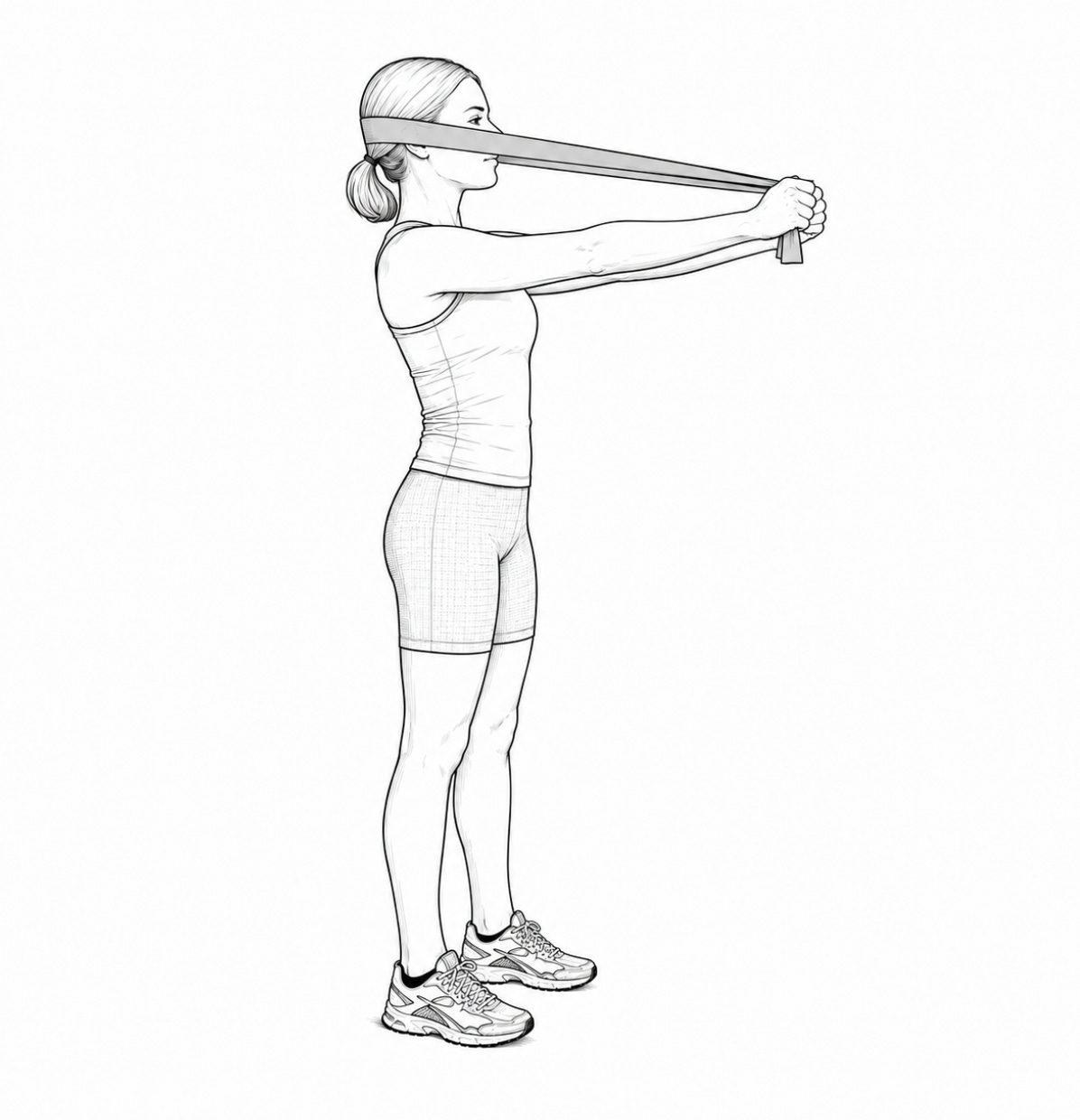
Why it works. As the band tugs at your head, the cervical extensors in the back of the neck must contract to hold it in place. There is no visible movement because it is an isometric contraction.
These muscles are at work all day to stop the head from falling forward, whether you are driving or sitting in front of a screen. When they get tired, that position can become a source of pain and protective tension. By building up their endurance with this banded hold, you make the routine task of supporting the head easier. You may also notice the neck is more at ease right after the exercise, as isometric work has been shown to lower pain sensitivity for a time.
It is an effective way to gain strength without having to move. A 2003 trial in JAMA by Ylinen put this to the test with 180 women suffering from chronic, nonspecific neck pain. They were given either a control program of stretching and aerobic activity, lighter endurance work, or isometric training using an elastic band. Twelve months down the line, the two groups that did neck training had seen far greater decreases in disability and pain than the controls. The isometric group in particular saw a 69 % jump in extension strength.
3. Levator scapulae stretch
Begin by sitting up straight. Use your right hand to hold the bottom of the chair, which will keep the right shoulder blade in place. Rotate your head about 45 degrees to the left, then look down toward your left armpit. Rest your left hand lightly on the back of your head and allow the weight of your arm to increase the stretch. Maintain this position for 30 to 60 seconds, then repeat on the opposite side.
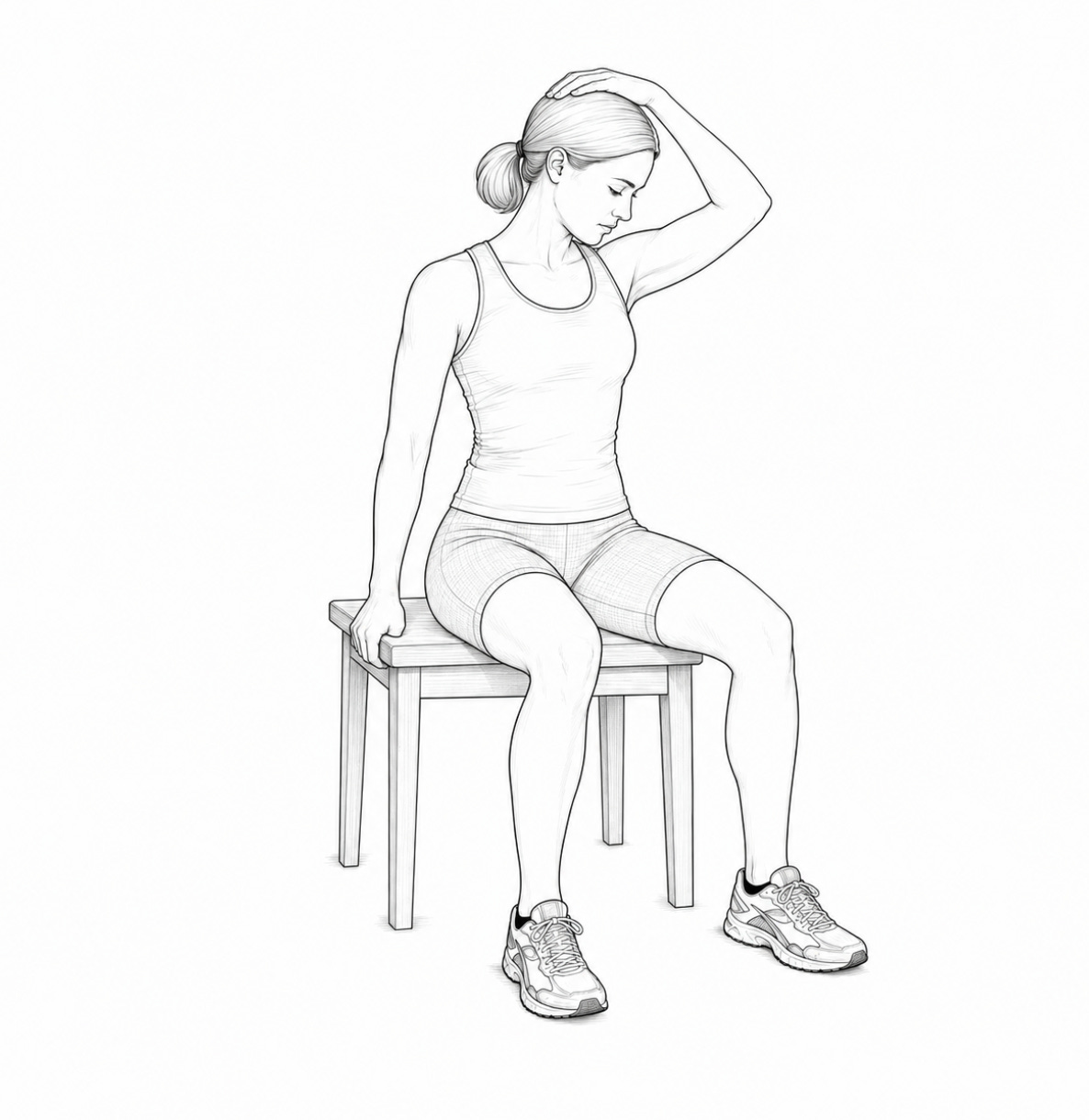
Why it works. The levator scapulae is a narrow muscle that runs from the upper inner corner of the shoulder blade to the first four cervical vertebrae, the top four bones of the neck. It can become stiff and painful when one shoulder remains raised, when you regularly carry weight on one side, or when your arms stay forward for hours at a computer. The levator scapulae runs directly through the area where many people feel a stubborn knot between the neck and the top of the shoulder blade.
To stretch the muscle, its two ends must move farther apart. Gripping the chair holds the shoulder-blade end down, while turning the head and looking toward the opposite armpit moves the neck end away from it. If the shoulder rises with the head, both ends move together and the muscle barely lengthens. The diagonal position of the head is also important because pulling it straight down places more of the stretch on the upper trapezius and other neck muscles.
Muscle and connective tissue are viscoelastic, meaning their resistance gradually decreases when a stretch is held steadily. A 30 to 60-second hold gives the levator scapulae time to soften and lengthen it. This reduces stiffness and the feeling of constant pull between the shoulder blade and cervical spine, relieve pain, and make turning the head easier.
Position matters too. Jeong and colleagues compared sitting, prone, and quadruped versions of this stretch in 24 university students with shortened levator scapulae muscles. The sitting version produced the largest immediate improvements in measured levator length and cervical range of motion.
Bonus: quadruped neck rotation
Come onto your hands and knees, with your hands under your shoulders and your knees under your hips. Keep your spine long and neutral, without rounding or arching your back. Hold your head in line with your spine with your chin slightly tucked and your gaze toward the floor. Keep your shoulders, rib cage, and pelvis completely still as you slowly rotate only your head and neck from side to side. Do six to eight slow rotations in each direction.
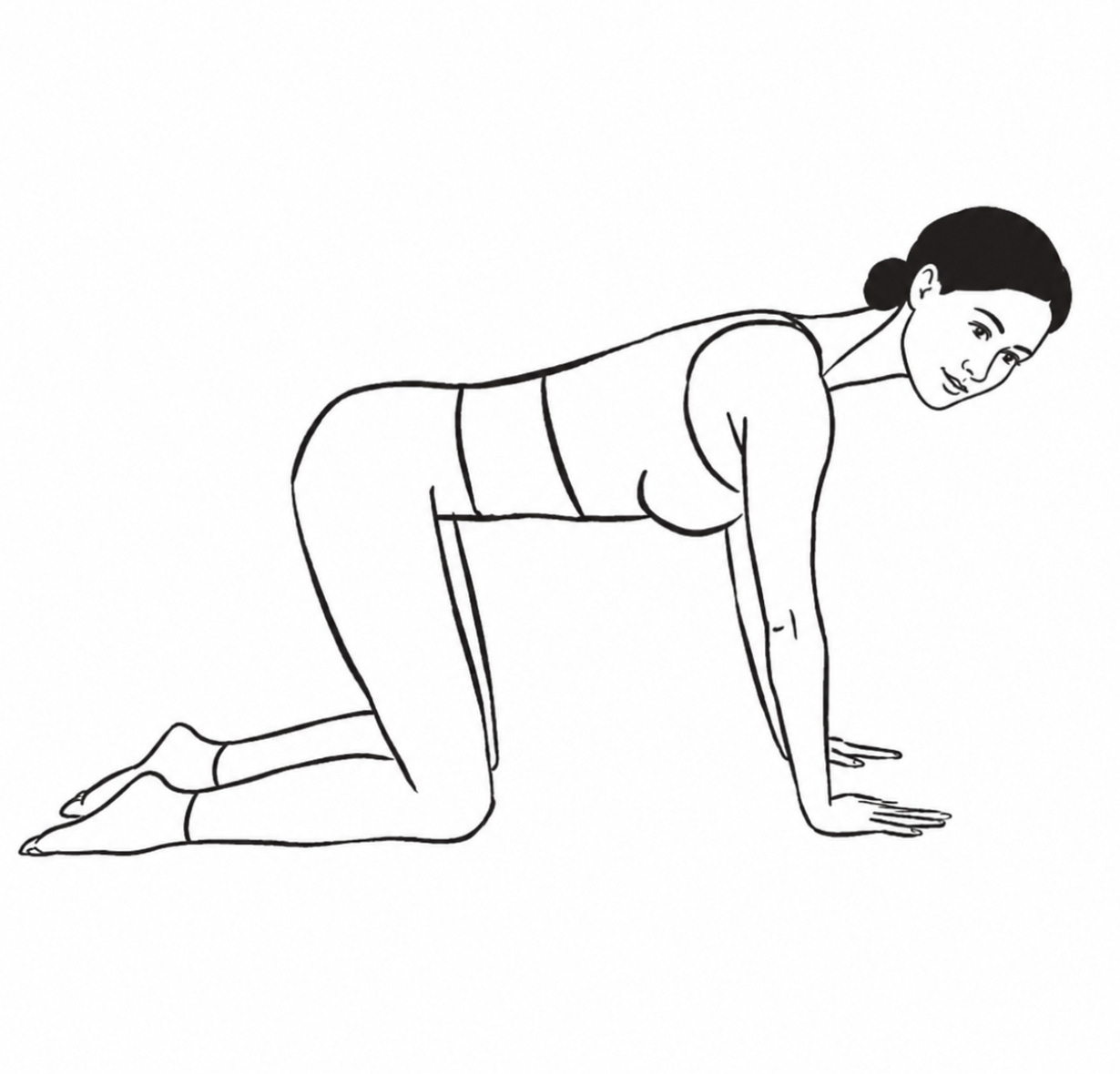
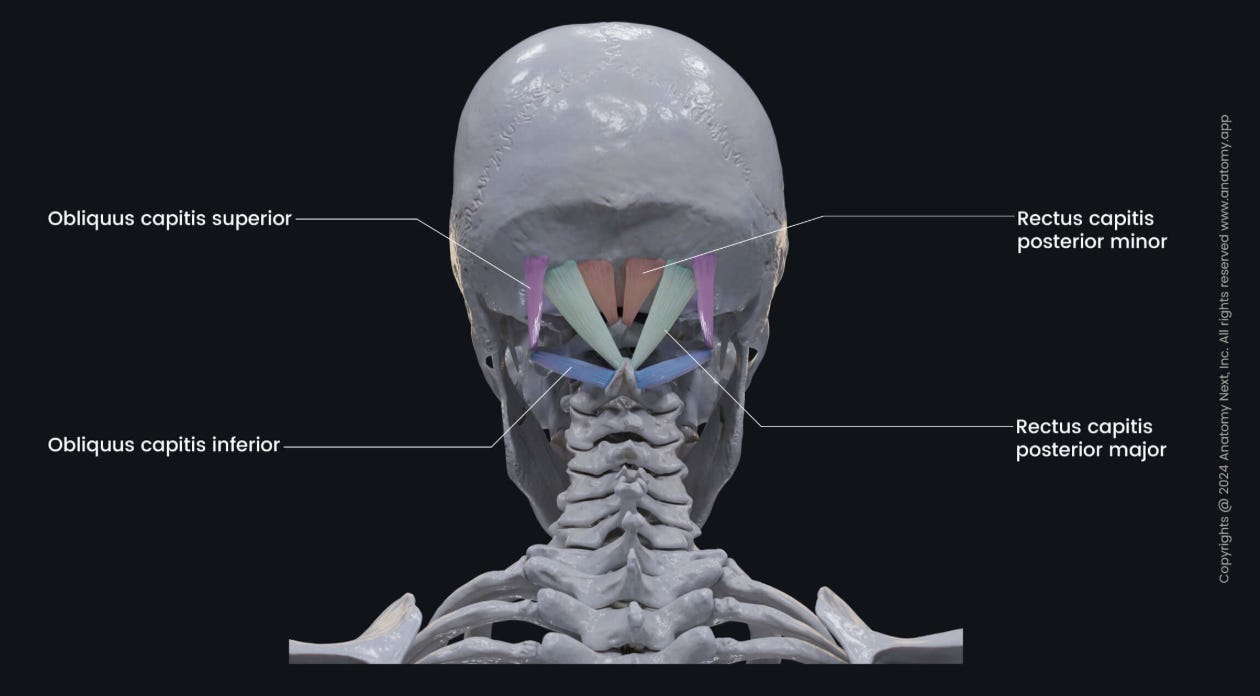
Why it works. The suboccipital muscles at the base of your skull have one of the highest muscle spindle densities in the human body. These are stretch receptors within the muscle that tell the nervous system about length and how fast it is changing, allowing the brain to coordinate the head’s position with the vestibular system and the eyes. In fact, an anatomical study of human fetal tissue found 98 spindles per gram in the rectus capitis posterior and 242 per gram in the inferior oblique.
People with long-standing neck pain can have a poor sense of where their cervical joints are. If they turn their head and try to find the starting point without looking, they tend to make larger errors. Slow, controlled rotation gives the nervous system repeated practice tracking the direction, speed, and range of the movement.
Being on all fours provides a firm base and alters the way gravity bears down on the neck. The extensors have to do the work of keeping the head in line with the spine while the rest of you remains still. This prevents you from borrowing part of the rotation from your torso, so you train both cervical rotation and the ability to control it independently.
There is research to back up the principle. A 2025 systematic review of 10 randomized trials found that sensorimotor training improved everything from balance and range of motion to pain and disability scores in people with chronic neck pain.
I especially recommend this for athletes and heavy lifters. They often become very good at bracing the head, neck, and torso as one solid unit; this exercise asks them to keep the torso stable while allowing the neck to rotate smoothly on its own.
When to expect relief
With a few days of steady practice, you will feel considerably looser. For something more chronic, however, allow for four to six weeks of consistency. That is roughly the timeframe in which exercise studies begin to show measurable changes in pain, endurance, range of motion, and Neck Disability Index scores.
If neck problems have persisted for years, continue with a short program of these exercises as maintenance. Remember this principle: strength, endurance, coordination, and comfortable range all fade when the body stops using them regularly.
I prefer to perform these exercises in the morning, after the neck has been in roughly the same position for eight hours of sleep and before it spends another 8 to 10 hours at a computer. This provides an excellent opportunity to activate and stretch the neck muscles before beginning your workday.
P.S. You can also add some gentle myofascial release - for example, by lying down with a massage ball under the muscles at the base of your skull. But this piece is mainly about exercises, so I’ll cover myofascial release properly in a separate article.
A word of caution: these are for the usual aches and stiffness. If the pain follows a serious injury, is sudden and severe, or is accompanied by fever, dizziness, numbness, loss of coordination, or changes in speech or vision, see a doctor. If you haven’t tried these exercises before, start gently and see how your body responds. Don’t pull hard or force your neck into any position. Stop immediately if any of the symptoms above appear.
References
Blomgren, J., Strandell, E., Jull, G., Vikman, I., & Röijezon, U. (2018). Effects of deep cervical flexor training on impaired physiological functions associated with chronic neck pain: A systematic review. BMC Musculoskeletal Disorders.
Chung, S. H., & Jeong, Y. G. (2018). Effects of the craniocervical flexion and isometric neck exercise compared in patients with chronic neck pain: A randomized controlled trial. Physiotherapy Theory and Practice
Falla, D., Jull, G. A., & Hodges, P. W. (2004). Patients with neck pain demonstrate reduced electromyographic activity of the deep cervical flexor muscles during performance of the craniocervical flexion test. Spine.
Jeong, H. J., Cynn, H. S., Yi, C. H., Yoon, J. W., Lee, J. H., Yoon, T. L., & Kim, B. B. (2017). Stretching position can affect levator scapular muscle activity, length, and cervical range of motion in people with a shortened levator scapulae. Physical Therapy in Sport
Jull, G., & Falla, D. (2016). Does increased superficial neck flexor activity in the craniocervical flexion test reflect reduced deep flexor activity in people with neck pain? Manual Therapy
Kulkarni, V., Chandy, M. J., & Babu, K. S. (2001). Quantitative study of muscle spindles in suboccipital muscles of human foetuses. Neurology India
Meyer, J. J., Berk, R. J., & Anderson, A. V. (1993). Recruitment patterns in the cervical paraspinal muscles during cervical forward flexion: Evidence of cervical flexion-relaxation. Electromyography and Clinical Neurophysiology
Pialasse, J. P., Lafond, D., Cantin, V., & Descarreaux, M. (2010). Load and speed effects on the cervical flexion relaxation phenomenon. BMC Musculoskeletal Disorders
Price, J., Rushton, A., Tyros, I., Tyros, V., & Heneghan, N. R. (2020). Effectiveness and optimal dosage of exercise training for chronic non-specific neck pain: A systematic review with a narrative synthesis.
Stanton, T. R., Leake, H. B., Chalmers, K. J., & Moseley, G. L. (2016). Evidence of impaired proprioception in chronic, idiopathic neck pain: Systematic review and meta-analysis. Physical Therapy
Turrina, A., Martínez-González, M. A., & Stecco, C. (2013). The muscular force transmission system: Role of the intramuscular connective tissue. Journal of Bodywork and Movement Therapies
Ylinen, J., Takala, E. P., Nykänen, M., Häkkinen, A., Mälkiä, E., Pohjolainen, T., Karppi, S. L., & Airaksinen, O. V. (2003). Active neck muscle training in the treatment of chronic neck pain in women: A randomized controlled trial.
Zaidi, S., Khan, S. A., Zaki, S., Sundus, H., Alam, M. F., & Nuhmani, S. (2025). Effectiveness of sensorimotor training on pain, cervical joint position sense, range of motion, balance, and disability in chronic neck pain: A systematic review.
Thank you for taking the time to out this together! Valuable information for those who will actually apply it!