

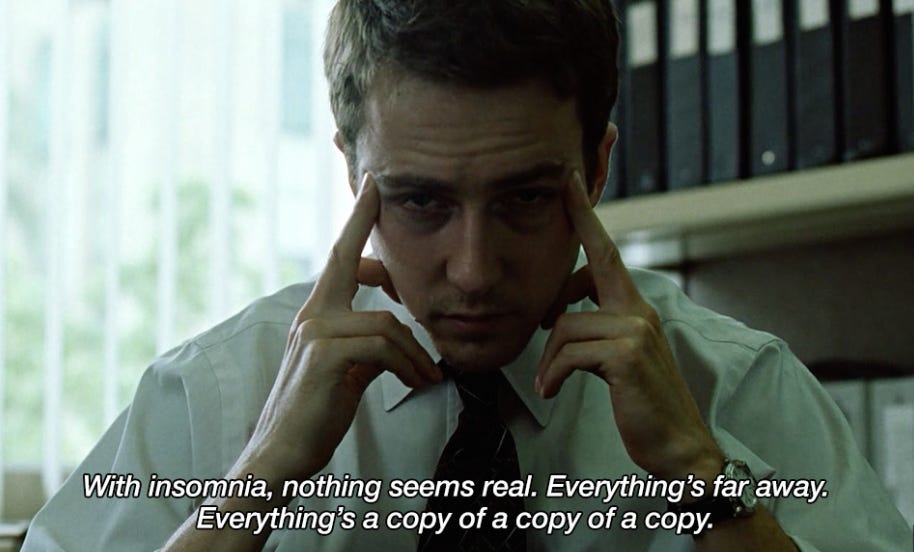
I remember sitting in the doctor’s office, hollow-eyed from yet another night of broken sleep. It reminded me of that scene in the movie Fight Club, where the main character begs for a pill just to finally pass out. Except in my case, I didn’t want a pill. I wanted answers. Deep down, I already knew band-aids never last and if you don’t find the root, the problem always comes roaring back.
At that point, I was almost convinced my endless anxiety, the crushing weight in my chest, sometimes so heavy I didn’t know how to keep going, and the sleepless nights stacked on top of it were nothing more than my stressful job and my rough childhood catching up with me. That’s the script most doctors push anyway. They don’t look deeper; they just wag a finger and say something about stress management or “getting more sleep” (the cruelest irony).
And yes, I tried therapy. And while I’m sure it helps some, it didn’t help me. I wasn’t broken because I hadn’t “processed enough.” So when I begged for an investigation, for someone to help me find out what was collapsing inside me, my doctor handed me a prescription for Lexapro instead. I was desperate, so I filled it. That night, I almost started. But before I did, I searched reviews.
What I found stopped me cold. A man in a shaky YouTube video begging others to stay away. He was sweating, broken, barely himself. Another woman said her partner had turned into a stranger. Someone else said it killed their will to do anything - even to love, even to have sex.
I shut the pill bottle. I never took it.
That night I started digging into biology on my own - hormones, metabolism, dopamine, serotonin. I began to see that anxiety and insomnia weren’t just psychological struggles, but signs of a deeper biological collapse.
And here’s what I’ll tell you: SSRIs like Lexapro are not the solution. They mask symptoms, but they don’t rebuild what’s failing underneath. They blunt serotonin pathways, but they do nothing for thyroid fire, gut health, or the steroid cascade - the actual systems that, when broken, create insomnia and anxiety in the first place.
Today, we’ll talk about why SSRIs are a dead-end strategy for anxiety and sleep and what you can do instead to restore calm and rebuild from the inside out
The Serotonin Trap
Why are SSRIs - serotonin boosters - the first-line answer for anxiety and insomnia? Two reasons: the biology is misunderstood, and the financial incentives are huge.
Medicine runs on the story that serotonin is the “happy chemical.” If you’re anxious, depressed, or sleepless, you must not have enough of it. Boost serotonin, fix the brain. That narrative is easy to sell to doctors, to patients, to insurance companies. Pills are quick, cheap, and endlessly refillable. A perfect profit model.
But here’s the physiology they don’t tell you: serotonin isn’t happiness.
In the body, serotonin slows things down:
· It suppresses mitochondrial energy production, lowering cellular metabolism.
· It raises prolactin, the same hormone that shuts down sex drive after childbirth.
· It blunts dopamine, robbing you of motivation, reward, and focus.
High serotonin sedates the system, blunts emotion, slows digestion and suppress metabolism. That’s why so many people on SSRIs feel flat, gain weight, lose libido, and still can’t sleep through the night.
And when it comes to sleep serotonin isn’t a sleep hormone either. It drives cortisol rhythms at night, keeping the stress system switched on. Instead of drifting into restorative deep sleep, you get sedation layered over stress chemistry. People stop dreaming, stop regenerating, and wake at 2 AM with their heart racing.
Now zoom out: why are so many people told their insomnia and panic are “mental illness” needing a serotonin pill? Because the real biology is rarely investigated. Low thyroid, low progesterone, and unstable cortisol explain more “anxiety” than any childhood trauma ever could. That’s not to dismiss real psychological struggles - sometimes you do need a shrink to help untangle your story. But far more often, what you need is to look at your biology. Low thyroid means the brain can’t fuel calm. Low progesterone strips away the body’s natural GABAergic sedative. Chronically high cortisol keeps you wired but exhausted. These are endocrine failures masquerading as psychiatric disease.
But here’s the uncomfortable truth: there’s no money in addressing thyroid, progesterone, or bile flow. No recurring billion-dollar prescriptions in telling people to eat enough carbs, stabilize minerals, or track their temperatures. SSRIs, on the other hand, lock people into a lifetime customer loop. They dull symptoms without resolving causes, which means you stay on them indefinitely. Perfect for revenue. Catastrophic for biology.
So the next time a doctor reflexively reaches for Lexapro when you can’t sleep or calm down, remember: they’re not addressing the engine. They’re pulling the battery out of the smoke alarm while the house keeps burning.
The Physiology of Insomnia
Insomnia isn’t just waking up in the middle of the night. It’s the whole brutal spectrum: lying there wired when you’re exhausted, finally drifting off and snapping awake again, or sleeping in fragments that never restore you. It is a body that cannot downshift, even when your mind begs it to.
Here’s what the body is doing under the surface. In a healthy rhythm, your liver holds enough glycogen (stored glucose) to quietly feed the brain through the night. When those reserves are thin - because you’ve under-eaten carbs, stressed your liver, or run on cortisol all day - the brain senses fuel scarcity. Around 2–4 AM, your body should still be resting. But if your liver runs out of glycogen, it panics. Cortisol and adrenaline surge early to free up emergency fuel. That surge is the jolt: heart pounding, thoughts racing, dread for no reason. This isn’t the healthy cortisol rise that’s meant to wake you up at dawn - it’s a stress response, hitting hours too soon because your system is running on empty.
Difficulty falling asleep has its own chemistry. Progesterone normally converts to allopregnanolone, a neurosteroid that turns up GABA - the brain’s natural brake. When progesterone is low, that GABA cushion is gone. Evening cortisol stays high, adrenaline keeps whispering “stay alert,” and the mind won’t release its grip. Add bright light at night, long gaps between meals, or stimulants on an empty stomach and you’ve given the alarm system reasons to keep you awake.
Staying asleep depends on warmth and steady energy. Thyroid sets the body’s thermostat; when it’s low, core temperature drops too much overnight. The nervous system interprets “cold” as “unsafe,” which fragments sleep into shallow cycles and restless tossing. Low pregnenolone - another neurosteroid precursor - makes synapses fragile and easily over-aroused, so tiny signals (a noise, a thought, a shift in blood sugar) become wake-triggers. Gut inflammation piles on: endotoxin leaking from sluggish digestion drives night-time cytokines that nudge cortisol up and deepen the spiral.
This is why sedatives and SSRIs so often disappoint. Sedation is not sleep. Those drugs can mute awareness, but they don’t refill liver glycogen, raise thyroid-driven warmth, restore progesterone’s GABA calm, or rebuild the neurosteroid buffer. With the cascade still broken, the body keeps choosing vigilance over restoration.
On the other hand modern diet culture is engineering insomnia on a mass scale. Keto, intermittent fasting, prolonged low-carb - all of them deplete liver glycogen by design. They’re literally built to keep you in a state where your body has no nighttime fuel, so cortisol and adrenaline have to take over. And people call that “adaptation”, when in reality, it’s biological chaos. Pair that with the endless stimulants, late-night blue light, and chronic under-eating, and you’ve created the perfect recipe for insomnia, anxiety and panic attacks.
The good news is that this physiology is fixable. When you give the system fuel, warmth, and the right signals, the switch flips: sleep holds, the 3 AM alarm goes quiet, and you wake steady instead of shattered. We’ll map exactly how to do that starting with food timing and thyroid support, layering minerals, neurosteroids, light, and somatic tools so the nervous system finally learns safety again.
The Science of a Hijacked Nervous System
If insomnia is the symptom, a hijacked nervous system is the machinery behind it. Your body runs on two gears: the sympathetic (fight-or-flight) and the parasympathetic (rest-and-digest). In health, you shift between them with ease - you wake with drive, digest after meals, wind down at night. But when energy production collapses, the sympathetic system takes over like a stuck accelerator pedal.
That’s why you find yourself clenching your jaw, breathing shallow, startling awake at the faintest sound. It’s not “just anxiety.” It’s biology locked in survival mode. When thyroid output is low, there isn’t enough fuel to fully relax. When progesterone and pregnenolone are flat, the neurosteroids that should press the “brake” on the nervous system simply aren’t there. The result is hyper-vigilance: panic on waking, tension even when you’re exhausted, a body that bends toward survival chemistry instead of restoration.
This is the real trap - your mind thinks it’s the one spiraling, but it’s your nervous system running without balance. And until you restore the energy and the hormonal brakes, no amount of meditation or therapy will fully switch that gear back.
The Rebuild Map — Biological Levers
When your nervous system and metabolism are compromised, sleep doesn’t just return because you “try to relax.” You have to repair the levers that actually drive your biology. When I finally began to rebuild, I realized recovery isn’t about tossing ten supplements into a pill box and hoping for the best. It’s about phases. The body has an order, and if you follow it, everything falls back into place much faster.
Phase One: Reset – 1-2 weeks
The goal here is to get out of survival mode and signal safety. This is where you pull the emergency brake on stress chemistry. Most people rush into supplements, but until your body feels safe, nothing works. The nervous system is stuck in sympathetic mode. You need carbs, minerals, and light cues to convince it that it’s safe to shift gears. This ties to Bile (moving toxins out) and Nutritional Repletion (fuel in). Without fuel and bile flow, nothing else will land.
Morning ritual: sunlight within 30 minutes of waking, 2 cups raw milk (ideally) or pasteurized milk with fruit + eggs/cheese for carbs, protein, and salt.
Note: Raw milk is one of the most complete “metabolic foods” - carbs (lactose) to refill glycogen, protein (casein + whey) for repair, calcium for the nervous system, sodium and potassium for fluid balance, and fat-soluble vitamins (A, D, K2) if it’s from grass-fed cows. The natural enzymes and probiotics make it easier to digest and less inflammatory than pasteurized milk for many people. If you don’t have access to raw milk, the next best is low-temp pasteurized, non-homogenized whole milk. For those who can’t tolerate milk directly, try:
- Filtered dairy (kefir, yogurt, farmer’s cheese) - fermented forms can be gentler.
- Goat or sheep milk - often easier to digest than cow.
- Lactose-free whole milk - still provides protein, calcium, and fat, just without lactose.
- Dairy + gelatin + fruit combo - if milk is completely off the table, combine fruit juice, collagen/gelatin, and a bit of salt for a similar metabolic effect.
The principle is simple: steady carbs, protein, and minerals early and late in the day to keep the nervous system calm and the liver stocked. Milk just happens to be nature’s perfect delivery system.
Evening ritual: dim lights 2 hours before bed, wear blue-blocking glasses, magnesium bath or foot soak for 20 min, warm milk + honey + pinch of salt before sleep (or baked apples/pears with cinnamon, honey, gelatin and cottage cheese)
Supplements: magnesium glycinate (200–400 mg), taurine (1–2 g) to calm adrenaline.
Exercise: pull back from HIIT/fasted training. Walks, yin yoga, yoga nidra, and breathwork only.
Note: Why sodium matters: it maintains blood volume and lowers aldosterone/noradrenaline. Low sodium = “wired” nights.
Phase Two: Repletion 3-6 weeks
Once stress chemistry is dialed down, you refill the minerals and nutrients that keep energy running. Low thyroid, low progesterone, low pregnenolone often reflect depleted cofactors. This is where enzymes switch back on. This ties directly to Thyroid & Temperature. Without cofactors, STAR protein and the steroid enzymes stall.
Minerals: calcium (dairy), potassium (fruit, potatoes), sodium with every meal.
Adrenal cocktail: ½ cup orange juice + ½ cup coconut water + pinch of sea salt mid-morning.
Gut care: daily carrot salad or cooked mushrooms to bind endotoxin.
Exercise: add gentle strength work, short sessions 2–3x per week, focused on form and recovery.
Nutrient cofactors:
Vitamin A (2500–5000 IU, retinol from liver or supp)
Zinc (10–25 mg with 1–2 mg copper)
Magnesium + B6
Selenium (100–200 mcg)
B1 (50–100 mg, thiamine & benfotiamine)
B2 (10–25 mg)
B12 (500–1000 mcg, a few times per week)
Phase Three: Regulation (bring hormones back online) 4-16 weeks or longer depending on how your body responds
This is where hormones can finally work. Don’t start here - earn it with phases 1 and 2. Now that you’ve restored cofactors, the steroid cascade begins flowing again. Progesterone rises in women, testosterone stabilizes in men, cortisol rhythms normalize. Read my article on Steroid Depletion for more information. At this stage we are finally giving pregnenolone a chance to flow into sex hormones instead of just cortisol.
Progesterone (Progest-E): luteal phase only, 3–10 mg/day for women; microdoses (1–3 mg) for men if excess estrogen/cortisol.
Pregnenolone: 10–30 mg AM, supports steady energy and “mother hormone” balance.
DHEA: 2–5 mg/day women, 5–15 mg/day men; boosts drive and libido when low.
Cynomel (T3): 2.5–5 mcg with food, only if temps/pulse remain low despite thyroid support. See my thyroid article for more information.
Aspirin + K2: 81–325 mg/day aspirin, always paired with K2 (100–200 mcg).
Exercise: start layering in strength work - focus on form, avoid overtraining.
Phase Four: Rebuild + Maintain (long-term balance)
By now sleep is steady, energy is stable, and hormones are flowing. The goal is to keep the rhythm without constant tinkering.
Keep forever: sunlight AM, darkness at night, steady carbs/protein, magnesium, taurine.
Rotate when needed: pregnenolone/DHEA, progesterone for cycle support.
Exercise: full strength training returns, but always paired with recovery - carbs + salt post-workout, red light, magnesium baths.
And here’s the key: hormones didn’t come first. If I’d started with them, they would’ve backfired - palpitations, anxiety, flatness. But once the foundation was there, they amplified it.
Why each lever matters (the physiology in one breath)
Salt holds plasma volume → lowers aldosterone & norepinephrine → fewer night palpitations.
Mini snacks with carbs at night keep liver glycogen full → no 3 AM cortisol dump.
Magnesium quiets NMDA, stabilizes ATP → easier downshift to deep sleep.
Taurine is GABA-mimetic + stabilizes heart rhythm + supports bile → calmer nights, better digestion.
Progesterone → allopregnanolone restores the brain’s own brake (GABA-A) without sedation.
Pregnenolone/DHEA rebuild neurosteroids → resilience to stress, steadier sleep architecture.
Blue-blockers + morning sun re-sync melatonin/cortisol → the nervous system learns time again.
The Somatic Reset
People often ask me if things like yin yoga, yoga nidra, or nervous system “hacks” can heal their anxiety and insomnia. The truth is: they can help but only if the biology underneath them is fed.
When I was fasting and under-fueled, I tried meditation and other similar tools almost religiously. I’d lie there for 30-40 minutes listening to a calm voice guide me into “deep rest.” But instead of relief, I’d end up jittery, more anxious, and frustrated that I couldn’t relax. Looking back, it makes perfect sense: my body didn’t have the glucose or thyroid drive to shift into parasympathetic mode. You can’t meditate your way out of starvation or low progesterone.
Once I had restored my thyroid function, supported steroidogenesis, and stabilized my meals, the same practices started landing differently. Yoga nidra/meditations and other similar practice stopped feeling like torture and actually became a reset button for my nervous system. That was the key lesson: somatic practices only integrate when the foundation - fuel, minerals, thyroid, steroids - is already in place.
Here are the practices that truly made a difference for me:
· Yin yoga: gentle postures held for minutes, signaling safety to connective tissue and fascia.
· Yoga nidra (my favorite is with binaural beats): guided non-sleep deep rest — one of the fastest ways to restore GABA calm when progesterone is working.
· TRE (tension release exercises) or shaking: discharges stored stress, mimicking what animals do after a chase.
· Vagal breathing + sound: slow exhales, humming, or chanting stimulate the vagus nerve, lowering heart rate and cortisol.
· Alexander Technique: a subtle but powerful method of retraining posture, breath, and movement. It teaches the body to stop bracing and compressing itself, restoring natural alignment. People often notice easier breathing, lighter movement, and less tension which feeds back into a calmer nervous system.
These techniques are inputs to retrain a body that has been locked in fight-or-flight. Done in a nourished state, they feel grounding instead of depleting.
Somatic work isn’t a replacement for biology. It’s an amplifier. Feed the body, restore thyroid and steroids, then these tools become the bridge between physiology and peace.
************
Bedtime Tricks that I love:
· Legs up the wall (Viparita Karani): 5–10 minutes with your legs elevated before bed lowers sympathetic drive, improves venous return, and signals safety to the body. It literally shifts you toward parasympathetic (rest-digest) mode. If your heart races or your mind spins at night, this can be the quickest brake.
· Heat pad on the abdomen or feet: warmth lowers cortisol, relaxes tight fascia, and reassures your nervous system that it’s safe. Many hypothyroid or depleted people run cold at night — the body won’t fully sleep if it feels cold. A heating pad or hot water bottle on your liver area or feet can be the missing signal that lets the system drop into deep sleep.
************
I hope this guide will improve the quality of your life, sleep deeper, and finally feel safe in your own body (and avoid SSRIs!). After decades of feeling on edge, I can tell you this works and it will work for you too. Because in the end, we’re not just fixing a nervous system. We’re restoring the inner landscape your body depends on.
Thank you for reading. Check out my previous articles for a deeper dive on Bile, Hormones, and Repletion, with more detail on protocols, doses, labs, and the science behind it all. You can also grab my free trackers and protocols from my website here.
Thank you for the article, Variana. I will have questions for you about milk and saturated fat as well as about hormone balance once I am able to access the q and a component of your work. I am a long time proponent of raw milk and I wish it was easier to get goat milk where I live.
Wondering why Aspirin is listed in protocol since regular use leads to ulcers. I also wonder how traditional Eskimos slept on an almost all blubber diet. When humans were Hunter/Gatherers sweet things like honey were a rarity. Dr William Davis’s Wheat Belly protocol limits carbs to 15g per meal and mostly from complex whole food carbs. I am assuming 15 grams for dinner is enough for no early sleep wake. Otherwise, a wonderful article!