
THE FORGOTTEN PHYSIOLOGY OF ALKALINE BATHS: A Return to Real Healing
The Old-World Therapy Modern Bodies Desperately Need — Plus Three Proven Protocols

This article is about a lost physiological intervention that four independent medical cultures studied, measured, and documented in precise, technical language. When you put baking soda into hot water, you’re not doing a wellness hack. You’re re-creating the chemistry of the Caucasian Mineral Waters, the thermal springs of Karlovy Vary, the protocols of A.E. Shcherbak, and the clinical hydrotherapy programs of John Harvey Kellogg. You’re stepping back into a scientific tradition that treated water like pharmacology - because in many ways, it is.
Baking-soda baths get treated like a quirky hack - a warm, fizzy trick for stressed-out metabolism people. But the truth is older, deeper, and much more embarrassing for modern medicine. What we now call a “soda bath” was once a respected medical intervention across four different scientific traditions: Soviet balneology, Russian hydrotherapy, Central European spa medicine, and early American physiology. Entire institutions were built around it. Clinical protocols, outcome studies, monographs, government-funded research - all devoted to understanding the chemistry of warm alkaline water and how it reshapes human physiology. Then the pharmaceutical age arrived, and the knowledge vanished. Not disproven - just abandoned.
Warm alkaline water consistently produced the same effects across continents and centuries: lower sympathetic output, improved peripheral circulation, relaxed smooth muscle, reduced biliary tension, calmer skin reactivity, better sleep, and a measurable shift away from stress metabolism. Soviet physiologists wrote about it. Austrian clinicians built hospitals around it. American physicians documented it before drug therapy buried the entire field. This is the physiology modern medicine forgot. Rediscover it with me.
Soda baths line up perfectly with the metabolic model laid out across decades: warm physiology, CO₂-dominant metabolism, peripheral circulation, anti-serotonin, anti-lactate, and the suppression of sympathetic dominance.
In other words: the exact environment most modern bodies never experience.
From a physiological standpoint, a warm alkaline bath hits several major systems at once - fast, predictably, and without pharmacology.
1. CO₂ Physiology
Warm water dilates vessels and reduces the need for hyperventilation. Bicarbonate in the water changes the pH gradient across the skin and superficial tissues. These two effects together mimic what Ray Peat called a CO₂-rich state: tissues shift slightly away from anaerobic metabolism, sensitivity to acidity decreases, and the body behaves as if it has more metabolic headroom.
People feel this immediately as warmth, calm breathing, clarity, and “softness” in the body.
2. Peripheral Vasodilation
Stress physiology always pulls blood inward - to organs, to escape responses, to metabolic triage. Warm alkaline water undoes this reflex. It causes a controlled, gentle vasodilation in the periphery, restoring circulation where it should have been in the first place.
Cold hands, cold feet, jaw tightness, scalp sensitivity - they all soften in this environment.
3. Smooth Muscle Relaxation (This Includes Bile Ducts)
Heat relaxes smooth muscle. Alkalinity decreases sensory irritation. Together they reduce tone in the biliary tree, intestines, vascular beds, and even facial musculature.
This is why people with RUQ tension, sluggish digestion, or hormonal congestion often feel relief within minutes.
4. Serotonin & Histamine Downregulation
Serotonin is not just a brain chemical - it’s a stress mediator that increases vascular tension, slows digestion, and amplifies inflammation. Histamine does similar things.
Warm alkaline water decreases cutaneous receptor sensitivity, reducing the “irritability” of tissues.
For someone living in sympathetic overdrive - the modern baseline - this feels like an internal exhale.
5. Anti-Lactate / Anti-Acidic Stress
Bicarbonate is a buffer. Even applied externally, it alters the surface environment enough to reduce nociceptive sensitivity and calm the hyper-reactive state characteristic of high lactate, overtraining, chronic stress, or metabolic suppression.
This is why soda baths often help people sleep even when magnesium supplements fail.
6. Autonomic Shift: Sympathetic -> Parasympathetic
A warm alkaline bath forces the autonomic system to stand down. The sympathetic branch withdraws; the parasympathetic branch finally gets room to operate.
This isn’t spirituality or placebo. It’s chemistry and heat interacting with nervous tissue, smooth muscle, circulation, and pH gradients.
And what’s striking, what sets the stage for the entire rest of the article - is that every major historical medical system that studied alkaline or mineral baths described the same physiological cascade.
THE SOVIET ERA: WHEN ALKALINE BATHS WERE MEDICINE
If you want to understand how profoundly modern medicine has collapsed in its understanding of human physiology, you only need to look at what the USSR was doing seventy years ago. Long before pharmaceuticals captured the medical imagination, Soviet scientists built an entire clinical discipline - balneology - dedicated to the therapeutic use of mineral waters. This wasn’t folk tradition. It wasn’t “spa culture.” It was institutional, systematic, and backed by physiology labs, government funding, clinical trials, and a level of rigor Western doctors today would barely recognize.
In Soviet hospitals and sanatoria, warm alkaline baths weren’t relaxation. They were interventions prescribed alongside liver treatments, autonomic nervous-system therapies, and dermatology protocols. The logic was simple but profound: the chemistry of water changes the chemistry of the body. A warm bicarbonate environment shifts vasculature, nerves, bile ducts, muscle tone, and inflammatory pathways. Soviet clinicians observed this so often, with such consistency, that they treated it as basic physiology.
Below are the figures who defined the field.
A.E. SHCHERBAK — THE AUTONOMIC NERVOUS SYSTEM
A.E. Shcherbak’s 1951 monograph “Léchebnye Vanny” (Therapeutic Baths) is one of the most technically precise works on hydrotherapy ever produced. What he describes sounds almost point-by-point like modern Peat physiology - except Shcherbak measured it directly in patients, decades earlier.
In controlled clinical settings, Shcherbak documented that warm alkaline baths consistently produced:
a measurable decline in sympathetic nervous-system activity
relaxation of vascular smooth muscle
improved peripheral circulation
increased warmth in hands and feet
softened neuromuscular tension
lowered neuro-vegetative “irritability”
easier sleep onset
reduced reactivity of skin receptors
You could slide this list into a Peat forum today and no one would blink. The difference: Shcherbak arrived at it through physiology, not theory. He measured blood flow, skin conductance, vasomotor response, autonomic markers, and symptom relief in thousands of patients.
His conclusion was simple: warm alkaline water produces a systemic autonomic correction.
Not as metaphor - as physiology.
S.P. LOSEV — LIVER, SKIN, AND MICROCIRCULATION
In the 1960s, S.P. Losev expanded the field in his work “Osnovy Kurortologii” (Foundations of Spa Medicine).” Losev focused on internal organ physiology and made observations that modern medicine continues to overlook:
Sodium bicarbonate baths improved hepatic blood flow
reduced microvascular congestion in the skin
softened inflammatory responses
lowered neuromuscular excitability
enhanced recovery from stress states
Losev treated bicarbonate baths almost like an internal medicine tool - a way to relieve organ-level stagnation, smooth microcirculation, and quiet inflammatory overactivity.
People today think of soda baths as skin treatments. Soviet doctors saw them as whole-body circulatory regulators.
I.V. VIKHLYANTSEV — BILIARY FLOW AND THE GOLDEN LINK TO HORMONES
Here is where Soviet science becomes shockingly relevant to the modern hormonal and metabolic conversation and directly relevant to your physiology.
Vikhlyantsev documented a finding that should have changed Western gastroenterology: warm alkaline baths reduce spasm in the biliary ducts.
This is not anecdote. It was measured. Smooth muscle in the biliary tree - the ducts, the sphincters, the gallbladder exit - all responded to heat + alkalinity with decreased tone.
Translated physiologically:
liver pressure decreases
RUQ tightness relaxes
estrogen metabolites clear more effectively
acne and PMS improve downstream
digestion stabilizes
constipation and gastric tension ease
systemic inflammation decreases
This one detail alone exposes how deeply modern medicine ignored basic physiology.
Soviet clinicians saw that water chemistry physically alters bile flow. And today, people rediscover the same effect - accidentally - in soda baths. Nothing about this is mysterious. It’s smooth muscle physiology responding to heat, alkalinity, and autonomic withdrawal.
CAUCASIAN MINERAL WATERS — THE NATURAL BICARBONATE BATH
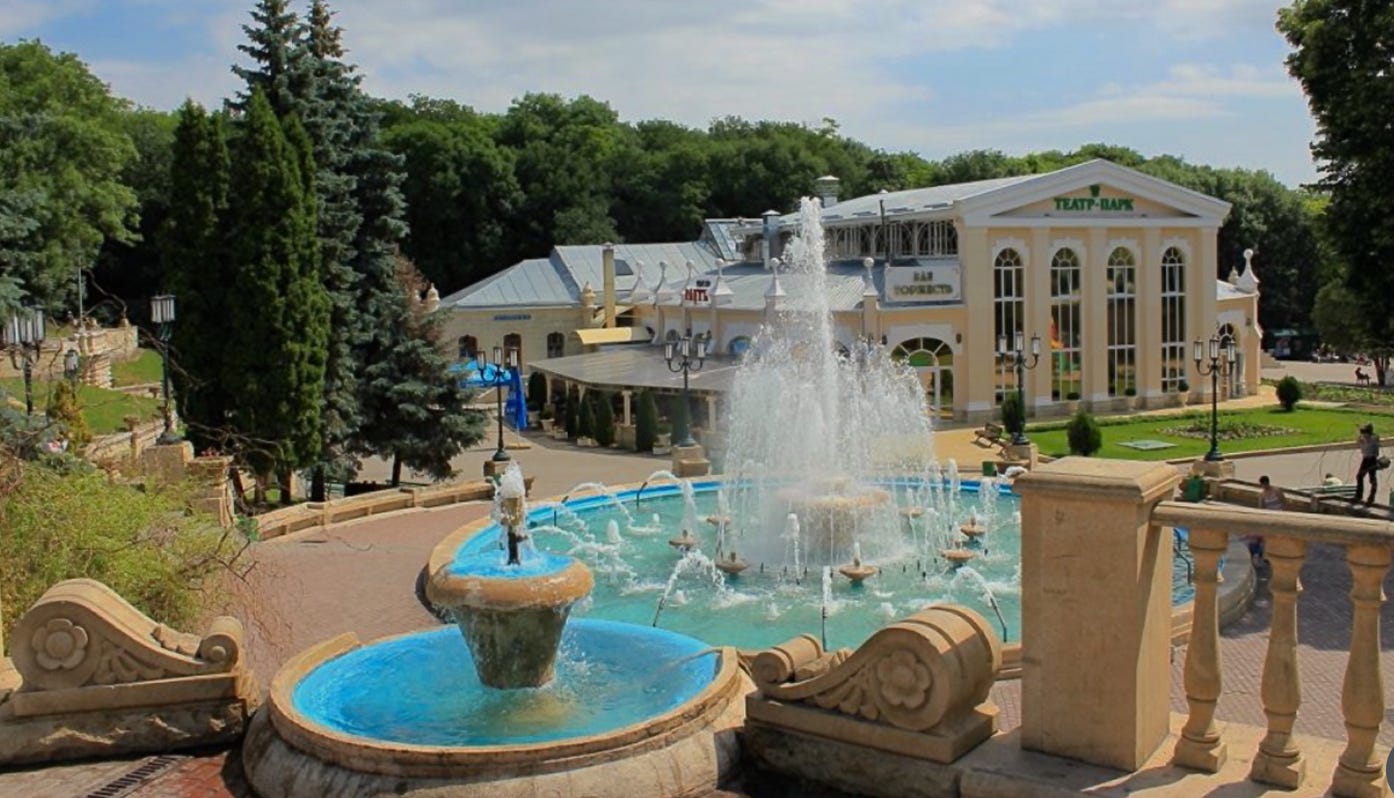
Essentuki. Borjomi. Kislovodsk. Zheleznovodsk.
The waters of the Caucasus are naturally rich in sodium bicarbonate. They are, chemically speaking, wild soda baths emerging from the earth. Soviet medicine used them aggressively in sanatoria:
liver disease
biliary dyskinesia
chronic stress states
dermatological inflammation
vascular rigidity
metabolic sluggishness
sympathetic dominance
These waters were so effective that the Soviet Union built entire resort-hospitals around them, where patients received regimented bathing schedules, controlled temperatures, and monitoring of autonomic and circulatory response.
The clinical notes read like a classic Peat physiology textbook:
improved warmth
softened skin reactivity
improved sleep
reduced biliary congestion
lower irritability
lower cardiovascular tension
It wasn’t mystical. It wasn’t ideological. It was measurable physiology induced by water chemistry.
And here is the irony: the Soviet system did not see this as alternative or fringe.
They saw it as medicine.
THE RUSSIAN PRE-REVOLUTIONARY PHYSIOLOGISTS
Before the Soviet Union institutionalized balneology, the groundwork had already been laid by Russian clinicians in the 19th century. They didn’t have CO₂ physiology, lactate measurements, or modern language for autonomic imbalance, but they observed the same core phenomenon: warm mineral water reliably corrected the patterns of a stressed human body.
Their writing shows something modern medicine refuses to admit: human physiology is not complicated. It’s consistent. And it responds to environment more predictably than it does to drugs.
A. M.Ya. MUDROV — “NERVOUS EXHAUSTION” AS PHYSIOLOGY
Mikhail Yakovlevich Mudrov was one of the first Russian physicians to take “nervous exhaustion” seriously - a condition we would now label as sympathetic overdrive, hypervigilance, chronic stress, and autonomic imbalance.
In the 1820s–1830s, Mudrov documented that patients with:
irritability
insomnia
internal “tension”
digestive stagnation
sensitivity to noise, temperature, and touch
cyclical fatigue
…responded consistently to warm alkaline mineral baths.
He didn’t talk about mitochondria or CO₂. He described sensations and functional improvements: loosened breathing, softer muscle tone, calmer pulse, smoother digestion, and deeper sleep.
What he was witnessing was the same physiological shift modern readers recognize instantly:
sympathetic deactivation → parasympathetic dominance.
Mudrov didn’t have the language, but he had the clinical eye.
B. G.V. ERISMAN — THE VASCULAR RESPONSE
Grigoriy Vasilievich Erisman, the father of Russian hygiene science, conducted some of the earliest structured measurements of temperature-induced vasodilation. His work in the 1870s–1890s established principles that would later become foundational in Soviet hydrotherapy:
hot water increases peripheral blood flow predictably
mineralized water increases the effect
warmth relieves vascular rigidity
autonomic pressure on vessels decreases
Erisman observed something crucial: The body relaxes when the periphery receives blood.
This is essentially Ray Peat’s argument about warm extremities, thyroid sufficiency, and metabolic flexibility - a century before Peat.
Erisman proved the mechanism: vasodilation is not cosmetic or subjective. It is metabolic liberation.
C. P.F. LESGAFT — MUSCLE RIGIDITY AND NERVE TONE
Lesgaft, a physiologist and anatomist, spent years studying the relationship between muscular rigidity, nerve excitability, and thermal environment.
He found that warm mineral water reduces neuromuscular tension more effectively than dry heat because water delivers temperature evenly and deeply, affecting smooth muscle and fascia as well as skeletal muscle.
This matters today because people misinterpret their own symptoms:
jaw tension
diaphragmatic tightness
RUQ pressure
pelvic floor rigidity
neck stiffness
cold extremities
“wired and tired” agitation
Modern medicine calls these psychological or idiopathic. Lesgaft understood and measured that they are states of increased sympathetic tone, and that warm water, especially mineralized or alkaline, interrupts this loop.
Together, Mudrov, Erisman, and Lesgaft formed the intellectual soil that Soviet balneology later turned into a clinical discipline. Their work proves something important for the modern reader: the physiological response to heat, alkalinity, and mineral water was observed long before anyone had biochemical models to explain it.
GERMAN–AUSTRIAN SPA MEDICINE: WHEN THERMAL CHEMISTRY WAS PHYSIOLOGY
If the Soviet Union turned balneology into a clinical science, Central Europe turned it into an entire medical civilization. Germany, Austria, and the Czech lands built whole towns around bicarbonate-rich springs - cities whose economies, hospitals, and scientific institutes revolved around the chemistry of water. Unlike today’s “spa culture,” these places weren’t about leisure. They were about treating circulatory stagnation, liver disease, chronic inflammation, autonomic imbalance, and what physicians described as “exhaustion of nerve tone.”
Modern readers underestimate what this meant.
Before pharmaceuticals, Central European doctors understood something modern medicine has forgotten: the body’s baseline state - warm, alkaline, well-perfused, parasympathetic - is therapeutic in itself.
Their recordings match Soviet findings almost exactly. This is the real historical convergence.
SEBASTIAN KNEIPP — NERVE IRRITABILITY AND VASCULAR RIGIDITY
Sebastian Kneipp is remembered popularly for cold water, but his actual medical practice was carefully dosed hydrotherapy - especially warm saline and alkaline baths. These were used for patients with:
· chronic tension
· irritability
· sleep disturbances
· vascular constriction
· inflammatory skin conditions
Kneipp wrote extensively about how warm mineral baths softened the “rigidity of vessels,” relieved internal pressure, calmed the pulse, and restored “natural warmth” to the extremities.
He didn’t know about metabolic rate, serotonin, or CO₂ retention. What he had was direct clinical observation: warm saline/alkaline water returns the body to its functional state.
Peat would say it reduces sympathetic dominance and lactate burden. Kneipp simply described it as “bringing life back into the blood.”
Both are the same phenomenon.
VINCENZ PRIESSNITZ — AUTONOMIC REGULATION THROUGH WATER
Priessnitz, often considered the founder of modern hydrotherapy, observed something nearly every one of these traditions emphasized: the autonomic nervous system is not abstract - it is physical, measurable, and responsive to water chemistry.
His patients consistently showed:
· softer breathing
· lower pulse tension
· reduced nervous agitation
· improved circulation in hands and feet
· relieved visceral tightness
Priessnitz didn’t call this “parasympathetic activation.” He called it “loosening of the internal strain.” Which is exactly what sympathetic withdrawal feels like.
AUSTRIAN SPA MEDICINE — WATER AS CLINICAL TOOL
Cities like Bad Ischl and Bad Gastein weren’t tourist attractions; they were highly organized medical institutions. Patients were admitted with diagnoses like:
hepatic congestion
biliary stagnation
chronic dermatitis
vascular rigidity
“nervous collapse”
sleep disorders
And they were treated with:
hot bicarbonate baths
saline-soaked compresses
alternating thermal protocols
mineral inhalations
hydrostatic pressure techniques
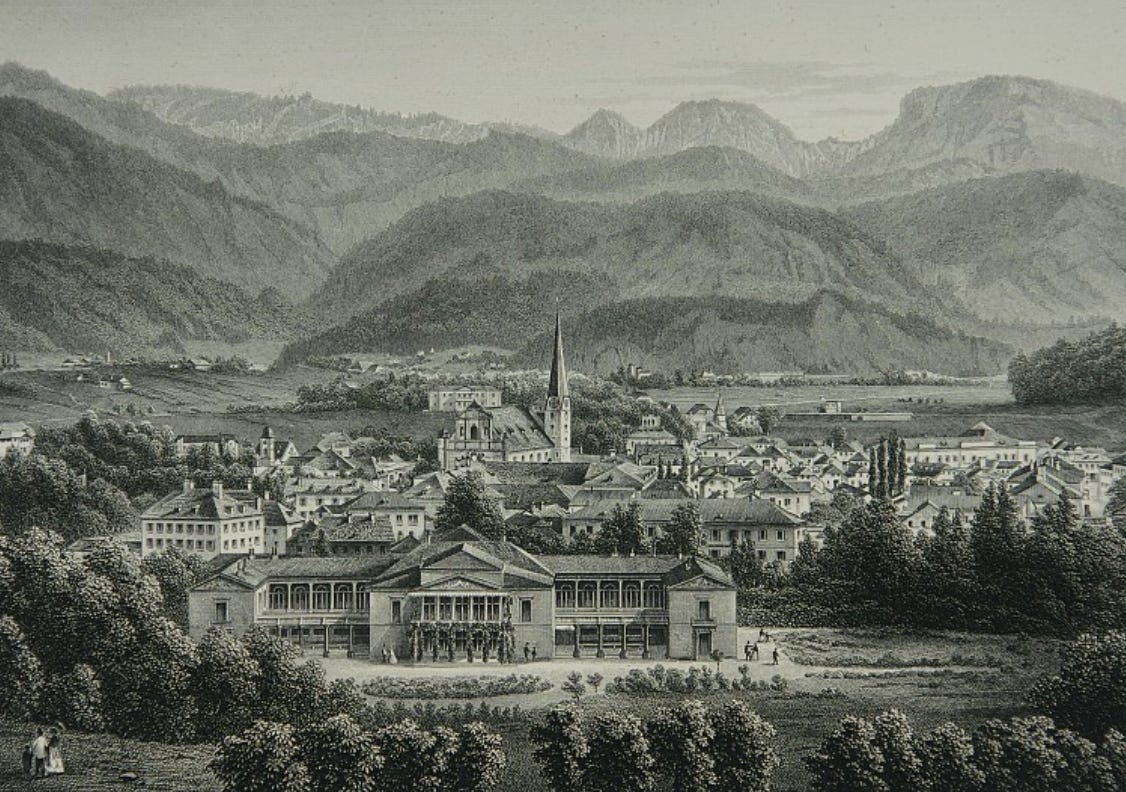
Their bicarbonate-rich waters acted as natural soda baths - identical in chemistry to modern baking-soda practices, just emerging from thermal springs instead of a kitchen box.
Austrian physicians carefully documented outcomes:
improved digestion, reduced anxiety, softer skin reactivity, decreased abdominal tension, warmer circulation, and smoother sleep patterns.
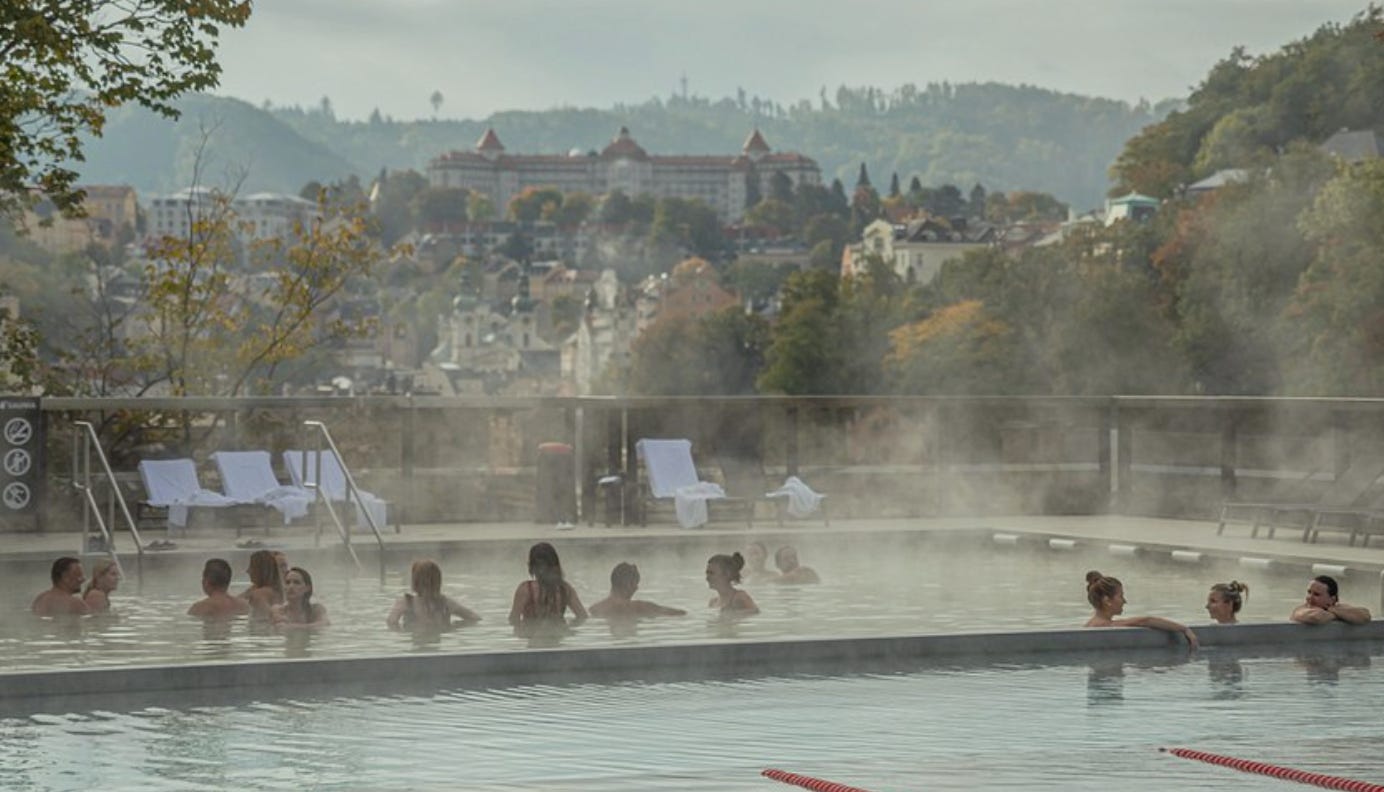
THE CZECH LANDS — KARLOVY VARY & MARIÁNSKÉ LÁZNĚ
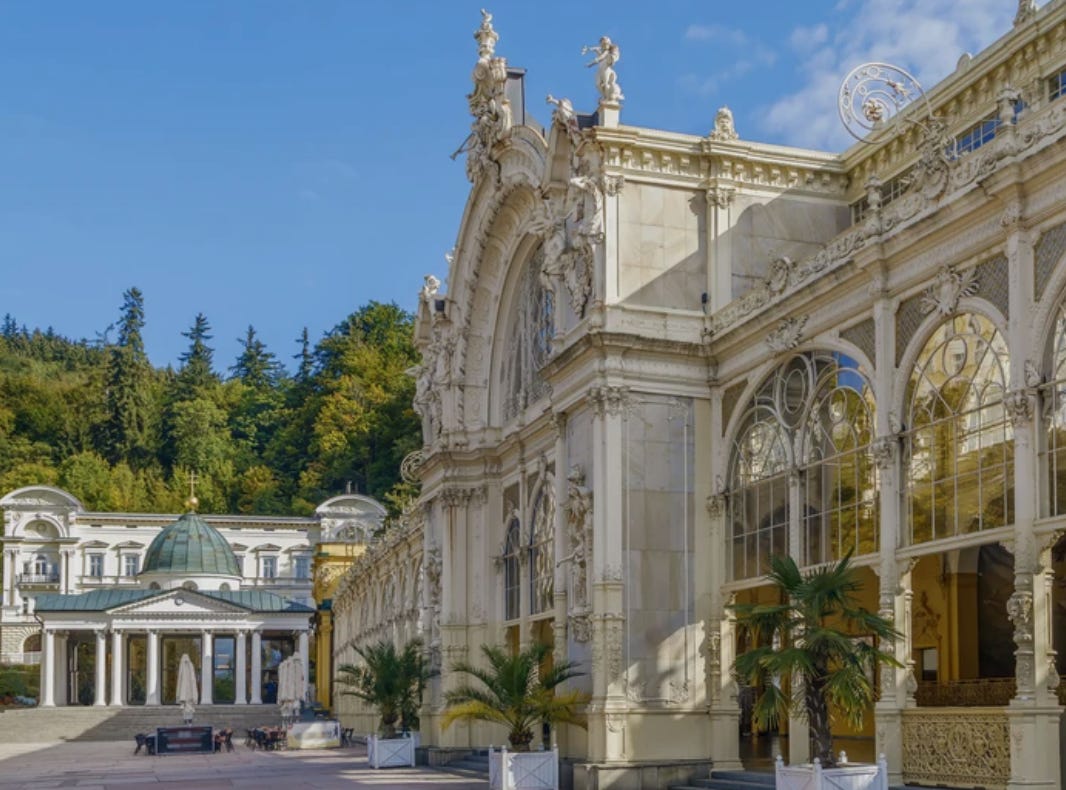
If there is any European location that parallels Soviet bicarbonate therapy almost one-to-one, it’s Karlovy Vary. Its waters are naturally alkaline, bicarbonate-rich, and saturated with dissolved minerals that mimic a baking-soda bath in both chemistry and physiologic effect.
Nineteenth- and twentieth-century records show these waters were prescribed for:
liver disease
biliary dyskinesia
digestive stasis
metabolic “sluggishness”
chronic stress states
inflammatory flare patterns
What’s astonishing is how similar the language is to Soviet writing: patients report relaxation in the right upper quadrant, softening of abdominal pressure, restored appetite, lowered irritability, improved sleep, and clearer skin.
This is exactly the phenomenon you describe in your own physiology - decades before CO₂ research, decades before Ray Peat, decades before anyone talked about bile flow as a hormonal regulator.
Karlovy Vary shows a simple truth: the chemistry of warm alkaline water interacts directly with smooth muscle, microcirculation, liver dynamics, and autonomic tone.
The entire region’s medical identity was built around that fact.
Central Europeans didn’t need biochemical explanations. They had empirical ones.
And what they recorded is the same cascade Ray Peat articulated in metabolic terms:
Warmth → vasodilation → parasympathetic shift → smooth muscle relaxation → improved bile flow → lower inflammatory reactivity → metabolic restoration.
The systems are the same.
Only the vocabulary changed.
EARLY AMERICAN PHYSIOLOGY: KELLOGG AND THE HYDROTHERAPY ERA
While Europe was building spa cities and the USSR was engineering balneology into a clinical science, the United States briefly flirted with the same physiological understanding - and then abandoned it almost overnight. The figure who captured this moment with the most precision was John Harvey Kellogg, a physician, surgeon, physiologist, and the author of one of the most comprehensive medical textbooks of the early 20th century: Rational Hydrotherapy (1903).
The book is nearly 1,200 pages long and reads like a lost manual of human physiology - meticulous, experimental, almost obsessive in its detail. Kellogg measured effects that modern doctors don’t even acknowledge: shifts in autonomic tone, vascular resistance, tissue acidity, microcirculation, sleep latency, and muscular tension. What he found, over and over, was that water - especially warm, mineralized, bicarbonate-rich water - alters the body more predictably than many drugs.
This was not wellness culture. It was early biomedical research.
Kellogg described something that parallels both Peat and Soviet science: the surface of the body becomes irritated, reactive, and prone to inflammation when tissues accumulate what he called “acid residues.”
He didn’t have lactate assays. He didn’t know about mitochondrial stress pathways. Yet his description matches what biochemists today would call local acidosis, high lactate signaling, and sympathetic activation.
His conclusion: warm alkaline water reduces this irritability.
Consistently. Measurably.
He observed that bicarbonate baths:
· reduced the sensation of internal pressure
· lowered superficial nociceptive sensitivity
· softened inflammatory reactions
· calmed the vascular tone
· decreased the “acidic tension” of the tissues
This is the same mechanism the Peat community experiences as anti-lactate or “CO₂-like” relief.
Kellogg repeatedly noted that patients emerging from warm bicarbonate or saline baths demonstrated:
· greater capillary perfusion
· softer pulse pressure
· warmer extremities
· reduced vascular rigidity
· easier breathing
· a “loosening of internal tension”
His term for this was lowered peripheral resistance.
Today, we call it improved microcirculation, CO₂ retention, or lowered adrenaline. Kellogg called it “the blood behaving more naturally.”
His clinical diagrams show the same pattern described by Shcherbak, Kneipp, and Vikhlyantsev: vasodilation restores metabolic competence.
This idea was once mainstream physiology.
Now it’s considered niche.
Kellogg was fascinated by the autonomic nervous system long before the field existed by name. He didn’t say “sympathetic” or “parasympathetic.” He said:
· “the organs soften their vigilance”
· “the inner pressure withdraws”
· “the nerves cease their irritability”
· “the pulse no longer stands guard”
But what he was describing is unmistakably sympathetic deactivation.
The most striking effect he documented was on sleep. Patients with stress insomnia, tension insomnia, digestive insomnia - the same categories modern people struggle with - responded to warm alkaline baths with predictable improvement:
· shorter sleep latency
· longer uninterrupted sleep
· calmer breathing
· reduced nighttime agitation
Kellogg wasn’t spiritual or mystical. He treated sleep as a metabolic reflex. And he found that alkaline warmth resets the reflex.
This is exactly what modern Peat-informed users report: if magnesium doesn’t help, the bath does. Not by relaxing the mind, but by relaxing the autonomic circuitry that controls it.
Kellogg distinguished between voluntary muscle stiffness (skeletal) and involuntary muscle rigidity (smooth muscle). He observed that warm mineral water affects both:
· abdominal walls soften
· diaphragmatic tension releases
· biliary pressure decreases
· vascular smooth muscle relaxes
· spasmodic constipation eases
· pelvic floor and lower abdomen loosen
His observations about biliary and digestive tension echo Vikhlyantsev’s findings in the USSR - but Kellogg arrived at them independently, decades earlier.
He was, in many ways, the missing link between the old European tradition and the later Soviet one: an American clinician who understood water as physiology rather than leisure.
Why the American Tradition Collapsed?
Kellogg’s hydrotherapy era died fast.
Not because it didn’t work - the results were clear, repeatable, and documented.
It died because the American medical system industrialized.
Pharmaceuticals entered.
Insurance models shifted.
Hospitals reorganized to maximize billable interventions.
Medical schools abandoned systemic physiology for reductionist biochemistry.
Water couldn’t be patented.
Warmth couldn’t be monetized.
Bicarbonate could be bought for pennies.
The practice disappeared not by scientific refutation, but by economic irrelevance.
Yet the physiology Kellogg measured aligns perfectly with Soviet balneology, Central European spa medicine, and Ray Peat’s metabolic framing - all independent of each other.
Between 1930 and 1960, Western medicine underwent a radical transformation.
The discovery of antibiotics, steroids, anesthetics, and early psychiatric drugs created a cultural illusion: the body could be controlled chemically, not contextually.
Physiology became secondary. Environment became irrelevant. Circulation, autonomic tone, temperature, pH, CO₂ - the fundamentals - were downgraded to trivia.
Medical schools rewrote their syllabi. The logic was simple: water chemistry can’t be prescribed at scale, patented, or monetized - pharmaceuticals can.
In the United States especially, the medical system was redesigned around reimbursement models.
Every reimbursable action required:
· a code
· a billing pathway
· a procedural justification
· a measurable intervention
Warm alkaline water doesn’t fit any of these categories.
You can’t bill it.
You can’t package it.
You can’t hospitalize people for it.
You can’t build a quarterly revenue cycle around it.
So it evaporated from practice - not because it failed, but because it didn’t generate revenue.
This is why the hydrotherapy sections of American medical libraries were quietly removed. The textbooks were literally thrown away.
Kellogg’s Rational Hydrotherapy went out of print for decades. Even now, medical students graduate without learning a single thing about autonomic regulation through thermal or mineral interventions.
Not because it’s wrong - because it’s unbillable.
Soviet Science Never Reached the West
The Iron Curtain didn’t just separate geopolitical blocs.
It severed scientific transmission. Soviet balneology — easily one of the most detailed physiological sciences of the 20th century - was:
· untranslated
· unpublished abroad
· locked in regional journals
· dismissed as “propaganda medicine”
· ignored by Western academia
The West didn’t disprove Soviet findings. It didn’t even read them.
This is why the most sophisticated biliary–autonomic research (Vikhlyantsev), microcirculatory analysis (Losev), and autonomic response documentation (Shcherbak) never entered Western physiology.
When the USSR collapsed, entire medical libraries disappeared. The knowledge simply dissolved into political dust.
Modern medicine behaves as if nobody ever studied warm alkaline water.
In reality, thousands of scientists did - their work just never crossed the border.
You Can’t Build Prestige Around Warm Water. This part is ugly but true. Medicine has a prestige economy. Therapies that look modern, technological, and pharmacological rise. Therapies that look simple, primitive, or non-mechanized fall. You can’t impress colleagues at a conference by telling them you treat biliary spasm with warm alkaline water. You can’t publish Nature papers on hydrostatic pressure and bicarbonate diffusion through the skin. You can’t secure a grant to study autonomic shifts from hot mineral baths.
But you can secure billions for:
· drugs
· devices
· imaging
· molecular research
· “innovation”
So the field that worked was discarded, and the field that paid was promoted.
THE MODERN PHYSIOLOGICAL INTERPRETATION
We’ve traced the historical arc, but the real power comes from translating those observations into a coherent physiological model - one that exposes why warm alkaline baths work now, in stressed, inflamed, sleep-deprived bodies living in a hyperadrenergic environment.
This is where the older traditions, Peat’s metabolic framing, and contemporary physiology finally lock together.
1. A Warm Alkaline Bath Creates a CO₂-Favorable Environment
The body’s metabolic flexibility depends on CO₂ - not oxygen alone. Warmth reduces vasoconstriction. Vasodilation increases CO₂ retention. CO₂ retention decreases lactate production. Lower lactate reduces local acidosis and inflammatory irritability.
This is the foundational idea: heat restores oxidative metabolism. Soviet physiologists saw it through microcirculation. Kellogg saw it through “acid residues.” Central Europeans saw it through vessel relaxation.
Modern physiology sees it as: mitochondrial respiration restored by thermally induced vasodilation and autonomic recalibration.
When warm water dilates the periphery, the entire metabolic gradient softens.
2. Alkalinity Alters Tissue Irritability and Inflammatory Signaling
Bicarbonate buffers acidic microenvironments. This doesn’t “detox” anything - it changes receptor thresholds.
When surface pH rises even slightly:
nociceptors calm
histamine-mediated itching decreases
serotonin-driven vasoconstriction lowers
mast-cell irritability declines
inflammatory cytokine signaling drops
This is why people experience:
calmer skin
reduced redness
decreased heat sensitivity
less “irritability” overall
A warm alkaline bath temporarily shifts the inflammatory baseline downward.
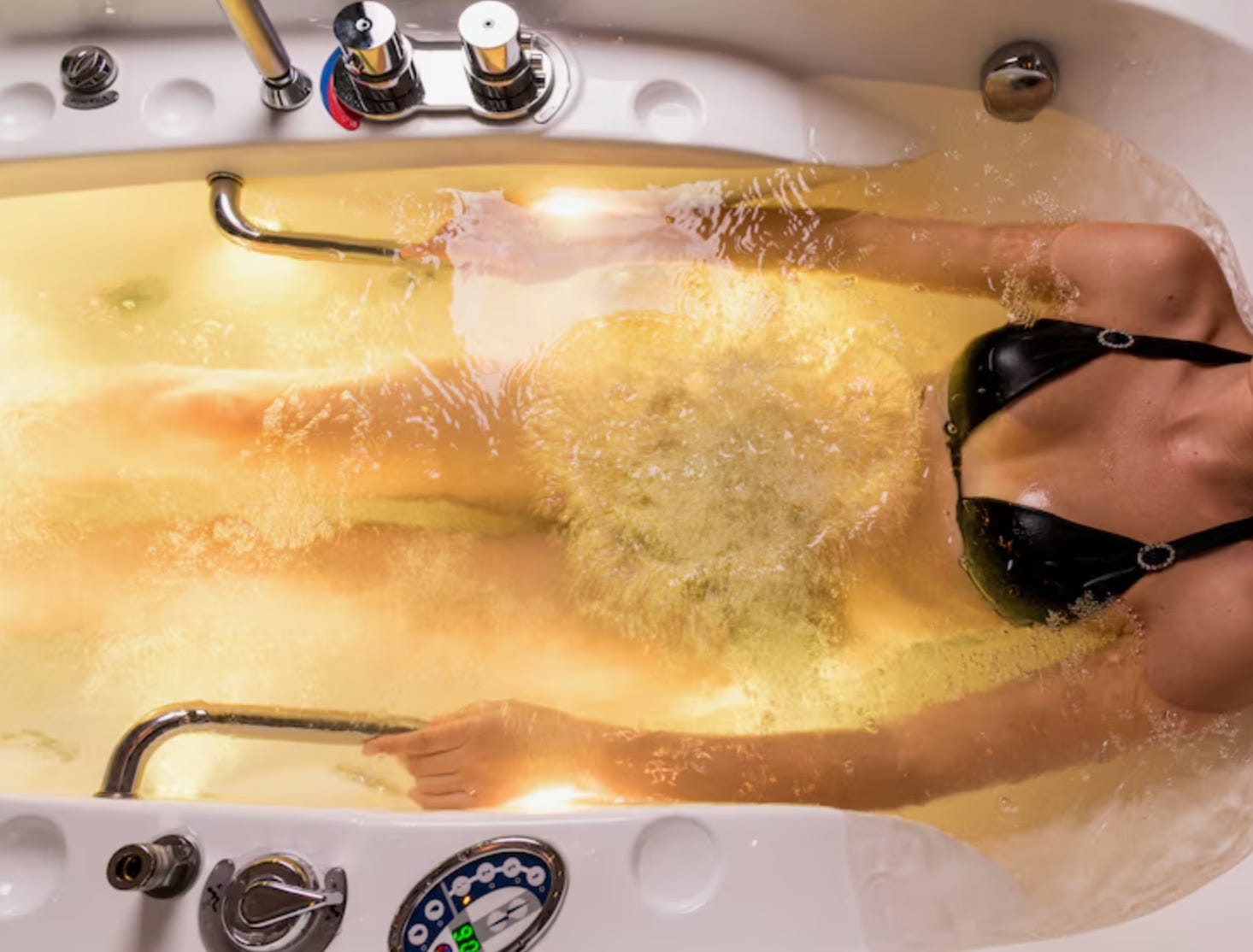
3. Smooth Muscle Relaxation (The Bile Flow Story)
Here is where you’ll never see modern literature connect the dots, but every old clinician already knew it:
The biliary tree is lined with smooth muscle. Smooth muscle contracts under sympathetic tone. Alkalinity + heat relax smooth muscle. Therefore bile flows.
This is why:
RUQ tightness dissolves
digestion improves
post-meal heaviness softens
skin clears
PMS symptoms ease
estrogen clearance improves
Poor bile flow is the modern disease nobody diagnoses. A warm alkaline bath is one of the few non-pharmacological ways to soften that system instantly.

Vikhlyantsev measured it. Karlovy Vary doctors built entire treatment systems around it. Peat framed it as metabolic unclogging. You feel it directly.
4. Autonomic Reset — the Sympathetic Off-Switch Modern Life Never Allows.
Modern life keeps the sympathetic nervous system locked “on.” Screens, deadlines, chronic inflammation, poor sleep, under-eating, overtraining, cold exposure the body didn’t ask for - they all add up to a body that never disengages from vigilance.
A warm alkaline bath forces a switch:
· dilation → parasympathetic rise
· warmth → vagal dominance
· calm → improved digestive motility
· softened tone → lowered cortisol output
· breathing slows → CO₂ increases
· circulation expands → metabolic cost decreases
This is why people feel like someone “turned the electricity off inside them.” It’s not psychological. It’s autonomic physiology releasing its grip on the entire body.
5. Surface Skin pH Is an Immune and Nervous Interface
The skin isn’t cosmetic. It’s an externalized limb of the immune and nervous systems.
Changing surface pH changes:
· microbial behavior
· keratinocyte signaling
· mast-cell activation thresholds
· neuroreceptor sensitivity
· microcirculatory patterns
This is why soda baths reduce:
· body acne
· inflammatory bumps
· heat-triggered irritation
· dermatitis flare-ups
· stress rashes
Losev described this in the 1960s. Kellogg saw the same effect in 1903. Modern dermatology still can’t explain why topical steroids are the only tool they recognize. Skin calms when the underlying state calms.
REMEMBER: Mitochondria Prefer Warmth and Vasodilation Over Cold and Constriction
Metabolic rate, hormonal stability, reproductive function, detoxification, digestion - they are all mitochondrial processes.
Mitochondria thrive when:
CO₂ is high
blood flow is robust
lactate is low
temperature is warm
vasoconstriction is minimal
parasympathetic tone is dominant
A warm alkaline bath gives mitochondria exactly this environment - even if only for 20 minutes. But a 20-minute correction can shift an entire 24-hour cycle: better sleep -> lower inflammation, better circulation -> better digestion, better bile flow -> improved hormones, lowered sympathetic tone -> lower cortisol, reduced skin inflammation -> fewer systemic flare signals.
The system resets because the mitochondria get one window of low-stress environment.
The next day, the body behaves differently.
The body is plastic. It adapts to whatever physiology you repeatedly expose it to.
Warm alkaline water is not a treatment.
It is a state - and the body internalizes states.
Put the body into sympathetic dominance every day → chronic disease.
Put it into warm parasympathetic tonus regularly → improved metabolism, digestion, hormonal balance, and mental clarity.
PRACTICAL APPLICATION: THE PROTOCOL
After all the history, physiology, and mechanistic detail, the practical question remains: How do you actually use a warm alkaline bath in a modern context?
The short answer: exactly the way the four historical medical systems did - with controlled heat, controlled chemistry, and clear intent.
THE FOUNDATIONAL RULE:
The bath must be warm enough to dilate vessels and calm the sympathetic nervous system. Lukewarm water will not do it. Too hot will overtax the system. Aim for “very warm but comfortably tolerable.” This is the cornerstone across every tradition.
COMBO A — BASIC ALKALINE BATH
The Soviet-style clinical formula.
Ingredients:
1 cup salt (sea salt or kosher salt)
½–¾ cup baking soda
Duration: 15–20 minutes
Physiological goal:
A general autonomic and circulatory reset.
This combo mirrors the weaker bicarbonate–saline waters used in standard Soviet balneological practice.
Best for:
stress tension
mild insomnia
digestive sluggishness
skin reactivity
post-exercise recovery
days when you feel “wired but not exhausted”
What it does:
Salt enhances peripheral vasodilation by increasing osmotic drive and heat retention.
Bicarbonate decreases superficial acidity, calming receptors in skin and superficial nerves.
This is your baseline maintenance bath - deeply effective without being intense.
COMBO B — STRESS SHUTDOWN / AUTONOMIC RESET
Ingredients:
2 cups salt
1 cup baking soda
Duration: 20 minutes
Temperature: Slightly warmer than Combo A, but not scalding.
Physiological goal:
Force the autonomic nervous system out of sympathetic mode and into parasympathetic dominance.
Best for:
high stress days
adrenaline crashes
PMS irritability
insomnia
overstimulation (caffeine, stress, overtraining)
jaw and neck tension
cold hands/feet + agitation
“wired & tired” evenings
What it does:
The higher sodium concentration produces deeper vasodilation, which increases CO₂ retention and lowers lactate production.
Bicarbonate enhances the anti-irritability effect at the skin and nerve endings.
Subjectively:
This is the bath that makes people say,
“I felt like someone unplugged the electricity in my body.”
That’s sympathetic release - the one modern life never allows.
COMBO C — BILIARY FLOW + LIVER RELIEF
The strongest formula. The one that shows up across Soviet, Czech, and Peat physiology.
Ingredients:
1 cup baking soda
1 cup salt
1 cup magnesium chloride flakes
(Magnesium sulfate/Epsom works, but chloride is gentler and more effective for smooth muscle.)
Duration: 15–20 minutes
Frequency: 2–3× per week or during active flares.
Physiological goal:
Relax smooth muscle through heat + alkalinity + magnesium and improve bile flow, hepatic microcirculation, and digestive motility.
Best for:
RUQ tightness
biliary dyskinesia
acne from poor bile flow
hormonal congestion (especially late luteal)
cyclical nausea
heavy, inflammatory PMS
digestive stasis
headaches from liver stagnation
skin flares linked to stress or meals
What it does:
Magnesium: relaxes smooth muscle everywhere — bile ducts, intestines, vascular beds.
Baking soda: buffers superficial acidity → decreases inflammatory receptor sensitivity.
Salt: amplifies heat retention and blood flow.
This combo is the closest modern equivalent to the “full treatment baths” used in Caucasian Mineral Waters sanatoria and Austrian spa hospitals.
If you’ve ever felt your RUQ soften in the bath, this is why.
FOR WOMEN: HOW TO TIME IT WITH YOUR CYCLE
Luteal phase (ideal)
Higher prostaglandins, more sympathetic tone, more bile stagnation, more metabolic friction — this is when alkaline baths work almost too well.
Cycle Days 1–3 (high benefit)
The prostaglandin surge + vascular spasm + inflammatory load respond dramatically to warmth and vasodilation.
Ovulation (if you tend to spike estrogen or get tension)
A bath can prevent the “pressure wave” that sometimes hits the RUQ, skin, or sleep.
Follicular phase (optional)
Useful for sleep and autonomic tone, but less essential unless you’re under stress.
______________________
It’s a modern re-creation of what Soviet clinicians, Austrian spa doctors, Czech balneologists, and early American physiologists already perfected: the deliberate use of water chemistry to reset human physiology.
It changes circulation, bile flow, autonomic tone, inflammatory sensitivity, and metabolic state — all in one intervention.
That’s why it survived across cultures. That’s why it’s resurfacing now. And that’s why it works.
Medicine loves complexity. It loves pathways, acronyms, receptor subtypes, 200-page guidelines, billion-dollar drugs, and diagnostic categories invented to justify the drugs. What it doesn’t love is simplicity - especially when simplicity works.
Warm alkaline water is simplicity. It’s also physiology at its most honest.
___________________________________
There is one more branch of bathing physiology that I deliberately left out of this article, because it belongs to a completely different system: osmotic therapy.
If the alkaline bath restores the autonomic–metabolic state, the osmotic bath does the opposite - it pulls. It forces fluid outward, triggers heavy sweating, unloads lymph, and makes the skin behave like a temporary kidney.
This protocol uses massive salt and soda concentrations (far beyond anything in this article), and it produces a very different physiological signature: intense sweating, strong lymph shift, deep fatigue afterwards, and a kind of “drained-out” lightness that people mistake for detox.
It deserves its own dedicated breakdown - mechanisms, indications, pitfalls, and the exact formula that Russian osmotic therapists still use today.
I’ll cover that in the next piece.
I now solidy dismiss health articles and diet advice if it doesn't address the PH and electrical functioning of the body as the root cause of any problem the writer is attempting to solve. This is a comprehensive and fascinating article.. Thank you for bringing this to the collective consciousness.
I bought a 6gal bucket from Redmond salt that is graded for animals, ie for salt licks? All the way to Alaska and it was still cheaper than anything else. Plus I rather like the idea their salt is from a a millions year old seabed. Imagine the minerals!