
4 Muscles to Train for Maximum Anti-Aging Effect
Ignore them and you age faster.

After 30, your body starts running a quiet demolition project. About one percent of your muscle mass disappears every year. By 50, you’ve lost roughly 20% and the decline accelerates from there.
Most people hear “muscle loss” and picture shrinking biceps, sagging arms. That’s the cosmetic version. The real damage is metabolic.
Muscle is your largest glucose sink. It’s where your body sends blood sugar to be burned for energy. Lose enough of it and your blood sugar climbs and insulin stays elevated. Over time, your cells become less responsive to insulin’s signal to absorb glucose. The common outcome is type 2 diabetes, cardiovascular disease, and chronic inflammation.
Muscle loss also means less CO2 production from oxidative metabolism. Less CO2 means less oxygen delivery to tissues (the Bohr effect). Less oxygen means more reliance on inefficient stress metabolism: lactate, adrenaline, cortisol. The body shifts from calm, efficient energy production to a kind of survival mode. Permanently.
And not all muscles contribute to this equally. Some have disproportionate functional impact, and their loss carries far bigger consequences. When they decline, entire systems collapse with them: glucose regulation, posture, breathing, circulation, gait.
So the question becomes: which muscles matter most?
1. The Gluteus Maximus
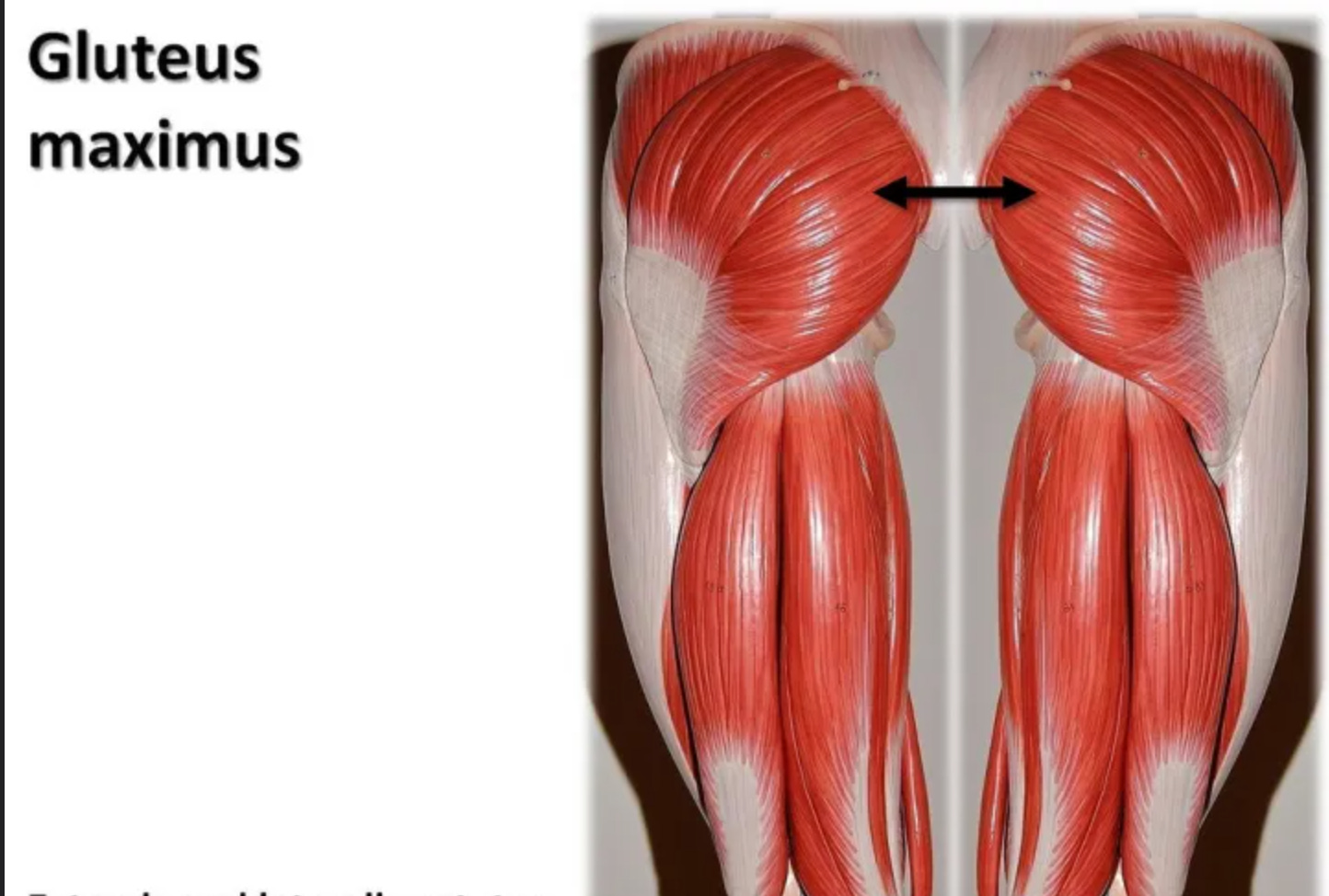
The largest muscle in your body. Also the most neglected by modern life.
You sit on it for 8 to 12 hours a day - office chairs, couches, hours in front of a screen. The muscle that was designed for powerful hip extension, for propelling you uphill, for stabilizing your entire pelvis, spends most of its time being suffocated. Compressed, blood flow restricted, its slowly atrophying.
Here’s why this matters metabolically: The glutes are one of your biggest glucose disposal sites. When this muscle is strong and active, it pulls glucose out of your blood like a sponge. When it atrophies, that glucose stays circulating. Insulin has to work harder. Your pancreas strains. The downstream effects touch everything from your liver to your brain.
There’s a structural piece too. Weak glutes destabilize the pelvis. Your lumbar spine compensates. Your hip flexors tighten. Your lower back starts aching, and you assume it’s a back problem when it’s actually a glute problem. The body is a chain. When the biggest link weakens, everything above and below it shifts.
The ancient Greeks understood this intuitively. Their athletes trained the glutes relentlessly, and their sculptors immortalized the results.
How to train it:
My number one pick is the walking lunge. I’ve tested and ranked every glute exercise I can think of, and lunges sit at the very top. They load the glutes through a full range of motion, one leg at a time, with your body moving through space. That combination of stretch, load, and locomotion is hard to beat. Dumbbells, barbell, bodyweight... all work. Just go deep enough to feel the glute stretch at the bottom.
Bulgarian split squats are a close second. Same single-leg advantage, with the added benefit of a deep hip flexor stretch on the back leg. Two problems solved at once.
Barbell hip thrusts are the most direct glute isolation you can get. They load the muscle hardest at lockout, where the glutes are fully contracted.
Squats work, but for most people they end up being quad-dominant. Unless you’re deliberately sitting back and loading the hips, they’re not the most efficient way to train the glutes. Useful, but not where I’d start if your goal is glute development.
Back extensions (on a 45-degree bench) also deserve a spot here. Angled slightly to bias the glutes over the lower back, they’re a simple, repeatable movement you can do every session. I highly recommend having a hyperextension bench (Roman chair) at home. It’s one of the most useful tools for both spinal and glute training. Mine sits right in my office.
Train them 2-3 times per week. They’re built for volume and recover fast.
2. The Spinal Extensors
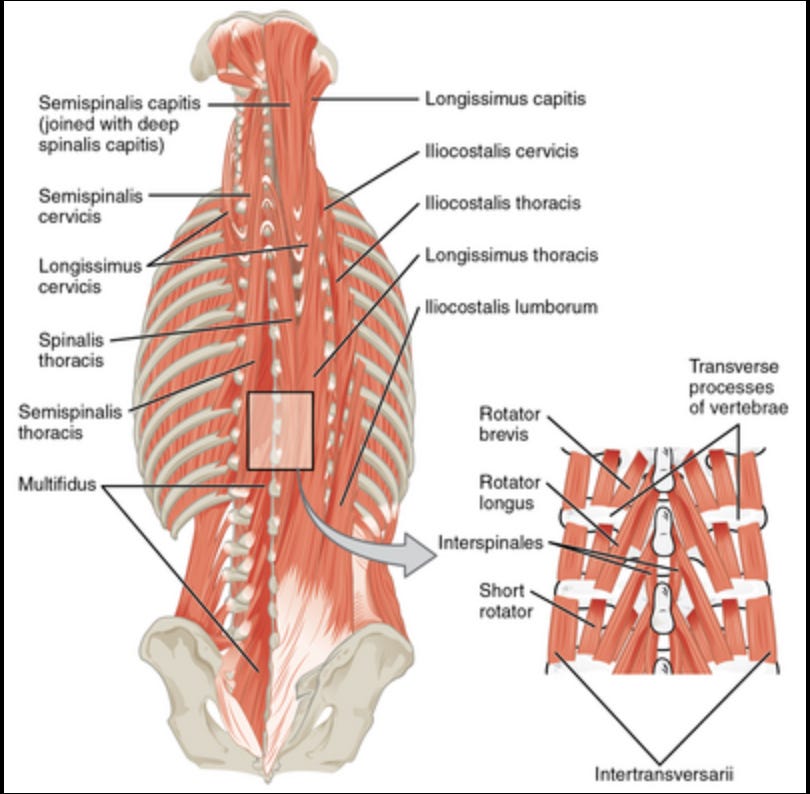
Run your hand down the center of someone’s back. Those thick columns of muscle on either side of the spine? Those are the erectors, the multifidus, the deep spinal stabilizers. They hold you upright. They protect your spinal cord. They keep your vertebral discs hydrated through loading and unloading cycles.
When they weaken, the spine collapses forward. Slowly, over years. Your thoracic curve deepens, your head drifts forward and your ribcage compresses. Compressed ribcage means reduced lung capacity. Reduced lung capacity means less oxygen exchange. Less oxygen exchange means less CO2 production. And we’re back to impaired metabolic function.
MRI studies of older adults tell a grim story. Cross-sections of the spine show vertebrae surrounded by thin films of muscle “floating” in fat. The technical term is intramuscular adipose tissue. The practical term is structural failure waiting to happen.
Every nerve connection between your brain and body passes through the spinal column. One compressed nerve can impair sensation, motor control, or organ function depending on the level. Strong spinal extensors keep the space between vertebrae open. They maintain the architecture that protects the most important cable system in your body.
There’s also a connection to disc health that most people don’t appreciate. Spinal discs don’t have a direct blood supply. They get nutrients through a process called imbibition, where loading and unloading cycles act like a pump, drawing fluid and nutrients in. When the muscles around the spine are weak and movement is limited, the discs dry out. They lose height. You literally get shorter. I have a separate article on how to prevent this if you want to go deeper.
How to train them:
Back extensions on a Roman chair are the bread and butter. Control the movement. Pause at the top. Feel the squeeze along the entire length of your spine.
Prone extensions from the floor work with zero equipment. Lie face down, hands behind your head, and lift your chest off the ground. Hold for 10 to 30 seconds. The burn will tell you exactly how deconditioned these muscles are.
Deadlifts train the spinal extensors isometrically, which is closer to how they actually function in daily life. They hold position while other muscles move load. Romanian deadlifts are particularly good because they keep tension on the posterior chain through the entire range.
Rows also train the spinal extensors isometrically, especially when done without support. I use them a lot. But they’re not enough on their own.
Bird dogs and Pallof presses train anti-rotation, challenging the deep spinal stabilizers, including the multifidus.
Consistency matters more than intensity here. These muscles need frequent stimulus to maintain their postural role. Even 5 minutes of prone extensions in the morning can make a measurable difference in how you stand, breathe, and move.
3. The Soleus
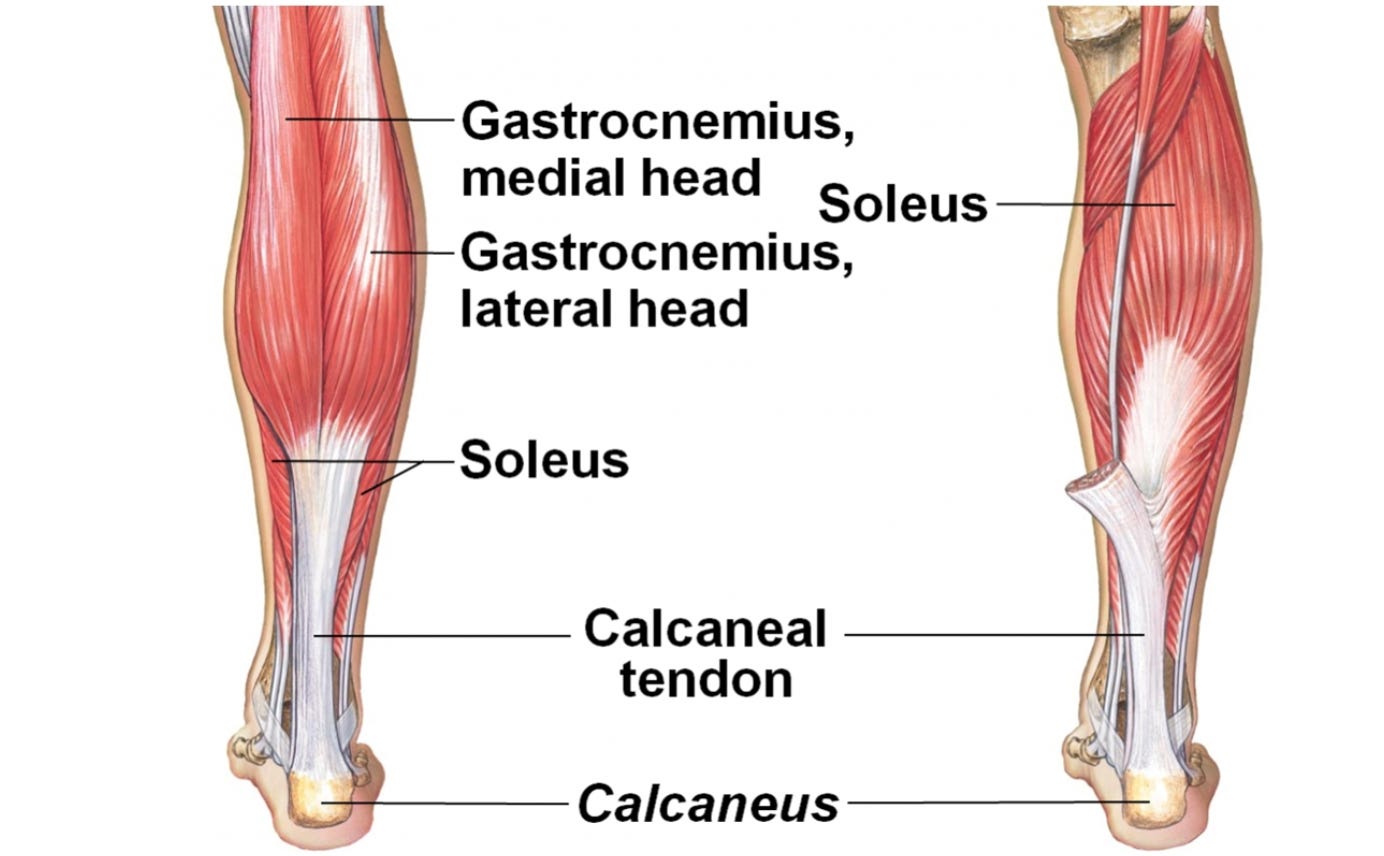
This is the sleeper pick. Most people couldn’t point to their soleus on a diagram. It sits beneath the gastrocnemius (the visible calf muscle), and it’s one of the most metabolically interesting muscles in your body.
In 2022, a study from the University of Houston made waves when it showed that sustained soleus contractions could improve blood sugar regulation by a remarkable margin, far beyond what you’d expect from such a small muscle. The researchers called it the “soleus pushup” and found that it could enhance oxidative metabolism for hours.
Why? Because the soleus is almost entirely slow-twitch. It’s built for sustained, continuous contraction. When you stand, walk, or just maintain upright posture, your soleus is working. It burns glucose oxidatively, meaning it uses oxygen to convert sugar into energy efficiently, producing CO2 as a byproduct. This is the exact metabolic pattern you want to support.
From a bioenergetic perspective, the soleus is doing precisely what Ray Peat described as healthy metabolism: efficient oxidative phosphorylation, good CO2 production, minimal reliance on stress hormones or lactate. It’s a small muscle doing big metabolic work.
There’s another angle too. The soleus acts as a peripheral heart. Every time it contracts, it helps push venous blood back up toward the chest against gravity. This is why standing still for long periods can cause lightheadedness and swelling, because the soleus isn’t contracting enough to keep blood moving upward. Weak calves mean pooling blood, sluggish circulation, and increased cardiac workload.
Soldiers have known this for centuries. Fainting on parade grounds isn’t caused by heat or dehydration most of the time. It’s caused by standing at attention with locked knees and inactive soleus muscles. The blood pools in the legs, venous return drops, and down they go.
How to train it:
The key is bent-knee calf work. When your knee is bent, the gastrocnemius (the outer calf) goes slack, and the soleus takes over. Seated calf raises are the most direct exercise. Slow, controlled reps with a pause at the bottom stretch and a squeeze at the top.
If you don’t have a machine, place a dumbbell or weight on your knees and perform seated calf raises that way.
Soleus pushups (the movement from the Houston study) are even simpler. Sit in a chair, feet flat on the ground, and raise your heels while keeping the balls of your feet planted. It looks like almost nothing. Do it for a few minutes and you’ll feel the burn deep in the calf.
Wall sits also hammer the soleus because your knees are bent and your calves are stabilizing. Add a heel raise at the bottom of a squat for extra soleus recruitment.
The beauty of soleus training is that you can do it anywhere. At your desk. On a phone call. Waiting in line. It’s the most accessible anti-aging exercise that almost nobody does.
4. The Tibialis Anterior
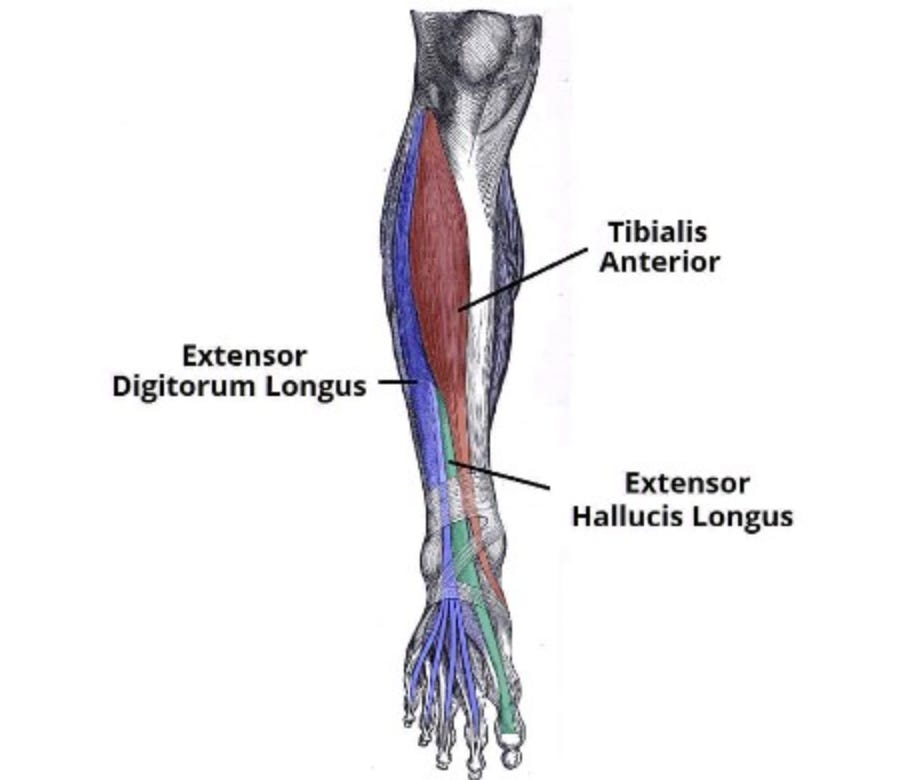
Put your hand on the front of your shin. Now pull your toes up toward your knee. Feel that muscle pop? That’s your tibialis anterior. It dorsiflexes your ankle, meaning it lifts the front of your foot off the ground with every single step you take.
This muscle is the difference between walking confidently and shuffling. Between catching yourself when you stumble and falling flat. Falls are the leading cause of injury-related death in adults over 65. Let that sink in. The leading cause.
And the number one predictor of fall risk? Ankle dorsiflexion strength. Which comes from the tibialis anterior.
The mechanism is straightforward. When you walk, your foot needs to clear the ground during the swing phase of gait. The tibialis anterior lifts your toes just enough to avoid catching on the floor. When this muscle weakens (and it weakens early, especially in sedentary people), you start scuffing. Tripping on carpets, curbs, uneven sidewalks. Each stumble is a warning sign that most people ignore until the fall that breaks a hip.
Hip fractures in the elderly have a mortality rate that should alarm everyone. About 20 to 30% of people over 65 who break a hip die within a year. The fracture itself isn’t what kills them. It’s the immobility, the muscle wasting from bedrest, the blood clots, the pneumonia. One fall can trigger a metabolic catastrophe that the body never recovers from.
A strong tibialis anterior prevents the fall in the first place.
There’s a secondary benefit worth mentioning. The tibialis anterior also decelerates your foot during heel strike, absorbing impact. When it’s weak, more force transfers up the chain into the knee and hip. Shin splints, knee pain, and chronic joint stress often trace back to tibialis weakness.
How to train it:
Tib raises are the gold standard. Stand with your back against a wall, feet forward, and lift your toes toward your shins. Start with bodyweight for sets of 20 to 30. It will burn fast because this muscle is almost certainly undertrained.
You can also do them seated by placing a weight on top of your foot and dorsiflexing against it. A dumbbell balanced on the toe of your shoe works well.
Walking on your heels for 30 to 60 seconds is another simple option. It looks silly. It works.
For progression, a tib bar allows you to load the movement with real weight. If you’re serious about longevity training, it’s one of the best equipment investments you can make.
Train the tibialis 3 to 4 times per week. It recovers quickly and responds well to higher rep ranges.
These four muscles share something important: they all decline early, quietly, and with cascading consequences.
Your glutes atrophy and your metabolism slows. Your spinal extensors weaken and your posture collapses, taking your respiratory capacity with it. Your soleus wastes and your blood sugar regulation deteriorates. Your tibialis anterior fades and your gait becomes unstable.
None of this shows up in a mirror. You won’t notice it in your thirties or even your forties. By the time it becomes visible, decades of decline have already accumulated.
The good news is that muscle responds to training at any age. Studies consistently show that people in their 70s and 80s can build significant strength and muscle mass when given the right stimulus. The body retains its capacity to adapt. You just have to ask it to.
You don’t need a complicated program. Walking lunges, back extensions, seated calf raises, and tib raises. Four exercises, 20 minutes, three or four times a week. That’s the minimum effective dose for targeting the muscles that aging comes for first.
The gym bros will keep chasing bigger arms and wider shoulders. That’s fine. While they’re curling in the mirror, you’ll be building the foundation that keeps you upright, metabolically healthy, and independent for the next 50 years. (No disrespect to gym bros — my brother was a bodybuilder, and I learned a lot from that world.)
Your body is going to age. The question is whether it ages into frailty or into resilience. These four muscles are where that story gets decided.
Such a useful and informed piece. Thank you and saving!
This was a "must read" for yours truly. You had me at "walking lunges." They have been, pun intended, kicking my butt, however those suckers work. So I can co-sign that. I started doing bb squats, (and various other styles) in my 40s. Personally, let's say, this vessel is not bound by the age-related atrophy stats of the average human. It doesn't have to be that way. Definitely need to add some of these exercises mentioned, especially for the back. Good lesson on soleus. Just sitting here nodding in agreement and noting the moves we are going to add, and re-visit. Many thanks.